Master the Short Back & Sides Haircut: Expert Guide
Introduction
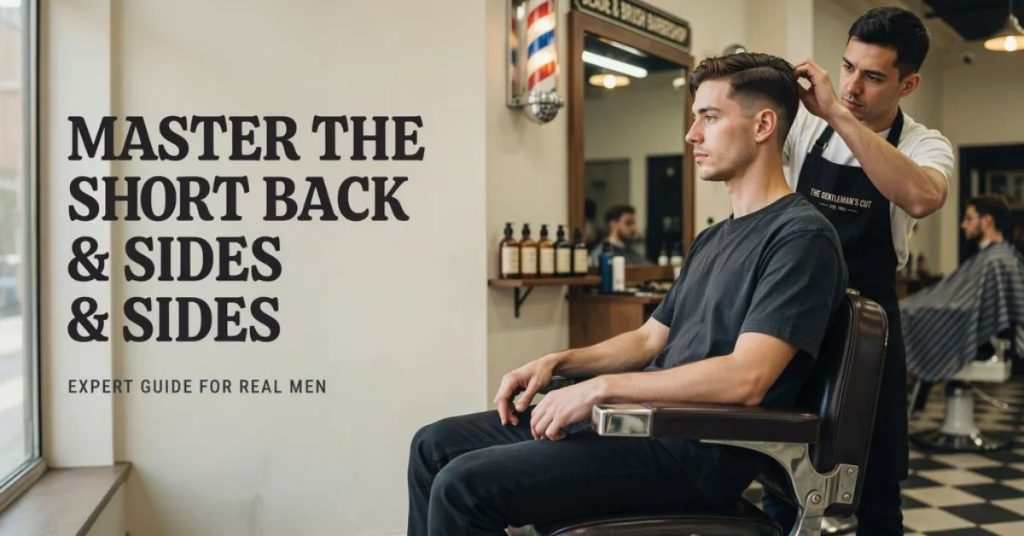
Few men’s hairstyles have remained as timeless as the mens short back and sides haircut. It has survived military traditions, Ivy League campuses, corporate boardrooms, fashion runways, and modern barbershops because it delivers one thing exceptionally well, balance. The haircut creates clean proportions, suits nearly every profession, and adapts easily to different face shapes, hair textures, and personal styles.
Today’s version goes far beyond the traditional cut. Modern barbers customize the transition area, alter fade heights, remove weight using advanced clipper techniques, and build texture with point cutting to produce a haircut that complements each client’s unique head shape. What appears simple often requires a deep understanding of cranial anatomy, growth patterns, hair density, and styling mechanics.
As a licensed barber with years behind the chair, I’ve learned that the biggest difference between an average haircut and an exceptional one isn’t the fade itself, it’s the consultation before the clippers even switch on. Understanding your bone structure, choosing the correct guard lengths, and selecting products that match your hair type all influence how the haircut looks on day one and four weeks later.
This guide explains everything from barber terminology and clipper mechanics to maintenance schedules, styling experiments, and proprietary frameworks that help you choose the right variation with confidence.
1. Deconstructing the Short Back & Sides
The Three Core Structural Planes (Top, Sides, Transition)
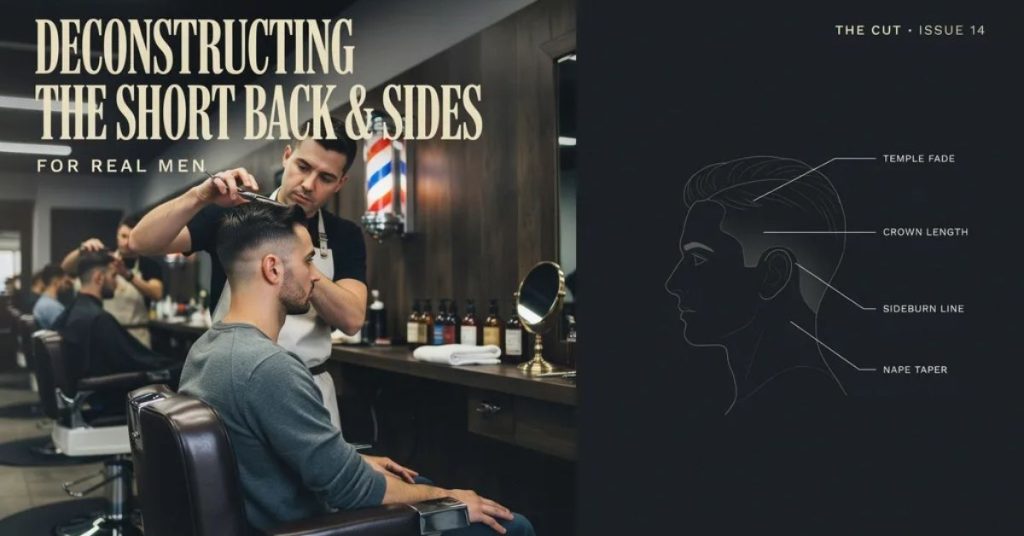
Every successful short back and sides haircut relies on three structural zones working together rather than independently.
| Section | Purpose | Common Technique |
| Top | Creates shape and styling versatility | Scissor cutting & point cutting |
| Sides | Removes bulk and sharpens silhouette | Clippers with guards |
| Transition | Connects top and sides naturally | Blending with lever work |
Many clients focus exclusively on the fade. Experienced barbers focus on the transition because poor blending instantly makes even an expensive haircut look unfinished.
The top provides movement and styling flexibility. Whether you prefer a textured crop, classic crew cut, Ivy League, or slick back, the top determines your daily styling routine.
The sides define cleanliness. Guard lengths usually range between #0 and #4 depending on how dramatic you want the contrast.
The transition zone sits around the parietal ridge, where many DIY haircuts fail. Proper blending follows the natural contour of the skull instead of creating a harsh horizontal line.
Understanding Clipper Guard Sizes
| Guard | Hair Length | Typical Use |
| #0 | Skin shadow | Skin fade |
| #1 | 3 mm | Tight fades |
| #2 | 6 mm | Conservative fade |
| #3 | 10 mm | Traditional short back |
| #4 | 13 mm | Longer taper |
Professional barbers frequently combine guards while adjusting the clipper lever to create seamless graduation rather than visible steps.
The Evolution: Classic Tailoring vs. Modern Skin Fades
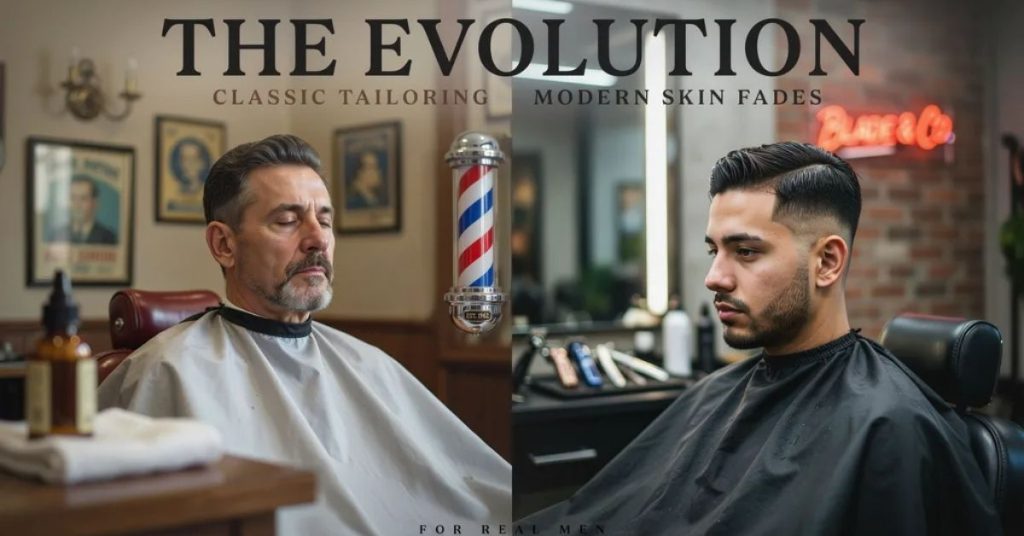
Traditional short back and sides haircuts emphasized neatness over contrast. Barbers removed excess weight while leaving enough length to create a soft taper around the ears and neckline.
Modern versions have introduced:
- Low fades
- Mid fades
- High fades
- Burst fades
- Drop fades
- Skin fades
- Textured tops
- Undercut variations
Despite these innovations, the underlying haircut architecture remains identical.
The difference lies in where the fade begins and how aggressively the transition removes bulk.
A classic businessman may choose a #3 taper with scissors over comb, while someone seeking a contemporary style might request a skin fade with a textured crop.
Both remain legitimate versions of the same foundational haircut.
2. Choosing Your Style: The Cranial Mapping Framework
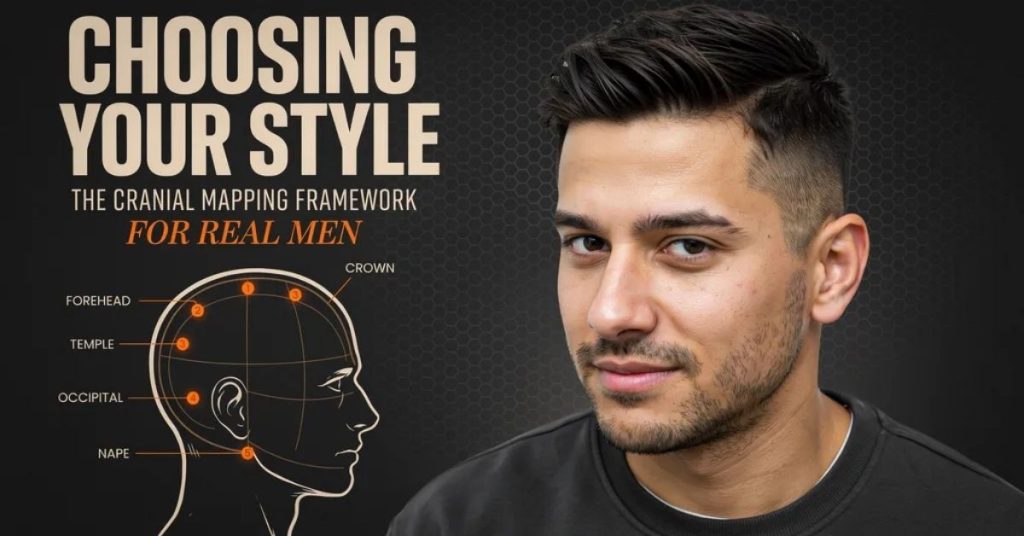
Choosing the right mens short back and sides haircut goes beyond following trends. A skilled barber studies your head shape, facial proportions, hair density, and natural growth patterns before selecting the ideal fade height and transition. This approach creates a haircut that enhances your features instead of simply copying a photo.
How to Balance Your Face Shape Using the Parietal Ridge
The parietal ridge, the widest point of the head, acts as the blueprint for a balanced haircut. Placing the fade too high or too low can make the face appear wider, longer, or less symmetrical.
Our Parietal Blending Formula helps determine the ideal transition point based on face shape.
| Face Shape | Fade Placement | Recommended Style | Why It Works |
| Oval | Mid fade | Classic short back and sides | Maintains natural balance |
| Round | High fade | Textured crop with volume | Creates visual height |
| Square | Low taper | Crew cut or Ivy League | Softens strong jawlines |
| Heart | Low fade | Longer textured top | Balances forehead width |
| Diamond | Mid taper | Side-part with texture | Adds width around the temples |
Low Fade, High Taper, or Scissor-Cut: Which Is Right for You?
Each variation creates a different silhouette.
- Low Fade: Best for professional environments and subtle contrast.
- High Fade: Creates a bold, modern appearance with maximum definition.
- Classic Taper: Offers timeless elegance and grows out naturally.
- Scissor-Cut Sides: Works well for men who prefer softer transitions and longer maintenance intervals.
Hair Type Modifications: From Fine Straight Hair to Coarse Coils
No single cutting technique suits every hair type.
| Hair Type | Recommended Modification |
| Straight Hair | Add texture with point cutting. |
| Fine Hair | Leave extra weight to create fullness. |
| Thick Hair | Remove bulk using clipper-over-comb techniques. |
| 2C Wavy Hair | Use longer guard lengths to control volume. |
| 3A Curly Hair | High fade keeps curls defined while reducing bulk. |
| Coarse Hair | Blend carefully around the occipital bone to avoid harsh weight lines. |
3. The Barber Consultation Blueprint (What to Say)
Many disappointing haircuts happen because clients and barbers use different terminology. Instead of saying, “Give me your usual,” explain exactly what you want.
How to Ask a Barber for a Short Back and Sides
Use a clear description such as:
“I’d like a low taper with a #1 on the sides, blended into a textured top that’s about two inches long. Please leave enough weight around the crown and taper the neckline.”
Mention:
- Preferred fade height
- Guard number
- Desired top length
- Neckline style
- Styling preference
- How often you get trims
Showing two or three reference photos also helps eliminate confusion.
Translating Style into Clipper Guard Numbers
| Guard | Approximate Length | Appearance |
| #0 | Skin | Sharp contrast |
| #1 | 3 mm | Very short |
| #2 | 6 mm | Clean everyday look |
| #3 | 10 mm | Traditional short back |
| #4 | 13 mm | Conservative business cut |
Specifying the Neckline
Three neckline finishes dramatically change the overall appearance.
| Style | Best For |
| Tapered | Most natural grow-out |
| Blocked | Sharp, defined finish |
| Rounded | Softer neckline for thicker necks |
4. Technical Execution: Behind the Chair Mechanics
Professional barbers rely on precision rather than speed. Every section requires controlled clipper movements and consistent blending.
The Role of Point Cutting for Internal Top Texture
Point cutting removes weight without shortening the haircut dramatically.
Benefits include:
- More movement
- Better styling flexibility
- Reduced bulk
- Improved texture
- Natural separation
This technique works especially well for straight and thick hair.
Managing Weight Distribution Around the Occipital Bone
The occipital bone influences how the haircut sits at the back of the head.
An experienced barber adjusts clipper angles to:
- Prevent bulky corners
- Maintain symmetry
- Avoid visible blend lines
- Follow the natural skull shape
Ignoring this area often results in an uneven silhouette, especially after two or three weeks of growth.
5. The Maintenance Lab: Styling & Longevity Data
A fresh haircut changes every week. Understanding this process helps you schedule trims and maintain a polished appearance.
The 6-Week Growth Study
Hair grows approximately 0.5 inches (1.25 cm) per month, although individual growth rates vary.
| Time After Haircut | Appearance | Recommendation |
| Day 1 | Fresh fade | Style lightly |
| Day 7 | Skin fade softens | Continue normal styling |
| Day 14 | Transition thickens | Minor cleanup optional |
| Day 21 | Around ears becomes bulky | Book next appointment |
| Day 28 | Fade becomes taper | Professional trim recommended |
| Day 42 | Shape largely disappears | Full haircut |
Recommended Trim Schedule by Guard Length
| Starting Guard | Maintenance Interval |
| #0 | Every 2 weeks |
| #1 | Every 2–3 weeks |
| #2 | Every 3 weeks |
| #3 | Every 4 weeks |
| #4 | Every 4–5 weeks |
The Product Selection Matrix: Pomade vs. Clay vs. Texture Powder
The right styling product depends on hair type and desired finish.
| Product | Hold | Finish | Best For |
| Pomade | Medium | High shine | Slick backs, side parts |
| Matte Clay | Strong | Matte | Textured crops |
| Texture Powder | Light | Matte | Fine hair needing volume |
| Styling Cream | Medium | Natural | Everyday business styles |
| Sea Salt Spray | Light | Natural | Wavy and layered hair |
Best Styling Routine
- Wash with a gentle shampoo two to three times each week.
- Apply conditioner regularly.
- Towel dry until slightly damp.
- Emulsify product fully in your hands.
- Apply from the back toward the front.
- Finish with fingers or a brush depending on your preferred style.
Author
Hamza
Licensed Master Barber | Founder, Vance Barber Studio
Hamza has spent more than twelve years specializing in classic men’s grooming and precision fading techniques. Having completed over 15,000 variations of the short back and sides haircut on straight, wavy, curly, and coily hair, he combines practical experience with technical education to help readers make informed grooming decisions. His recommendations reflect daily work behind the chair and advanced training in precision cutting and blending.
Conclusion
The mens short back and sides haircut remains one of the most versatile and timeless hairstyles because it adapts to virtually every face shape, profession, and hair texture. Whether you choose a classic taper, a modern skin fade, or a textured crop, success depends on more than the clipper guard you select. A thorough consultation, proper blending around the parietal ridge and occipital bone, and a styling routine tailored to your hair type all contribute to a polished result.
By understanding the mechanics behind the haircut, communicating clearly with your barber, and following a consistent maintenance schedule, you can keep your style looking sharp long after you leave the chair. Treat your haircut as a personalized design rather than a one-size-fits-all template, and you’ll achieve a look that complements both your features and your lifestyle.
FAQs
1. How often should I get a short back and sides haircut?
Most men keep their haircut looking its best by visiting the barber every three to four weeks. Skin fades usually require maintenance every two weeks.
2. Is a short back and sides haircut suitable for thinning hair?
Yes. A low taper or textured crop can create the appearance of fuller hair while reducing contrast around thinning areas.
3. What’s the difference between a taper and a fade?
A taper gradually shortens the hair around the sideburns and neckline, while a fade removes more length higher up the sides for stronger contrast.
4. Which styling product works best for fine hair?
Texture powder and matte clay usually add volume without making fine hair appear greasy or flat.
5. Can curly hair wear a short back and sides haircut?
Absolutely. Curly hair pairs well with low, mid, or high fades that reduce bulk while showcasing natural texture on top.