British Haircut Men: Classic & Modern Styles Guide
Introduction
British men’s hairstyles have shaped grooming trends for decades. From the sharp side parts of London’s gentlemen to the rebellious Mod movement and today’s textured crops, British haircut men styles combine timeless elegance with modern versatility. They focus on clean lines, natural texture, and precision scissor work instead of overly dramatic fades.
Today, many men choose British-inspired haircuts because they suit different face shapes, hair types, and lifestyles. Whether you want a professional office hairstyle, a casual textured look, or a vintage-inspired cut, British barbering offers a style that looks polished without appearing overly styled.
This guide explains everything you need to know about british haircut men styles. You’ll discover their history, learn the technical barbering methods behind each cut, compare classic and modern variations, understand which haircut matches your face shape, and find the best styling products recommended by experienced barbers.
What Is a British Haircut for Men?
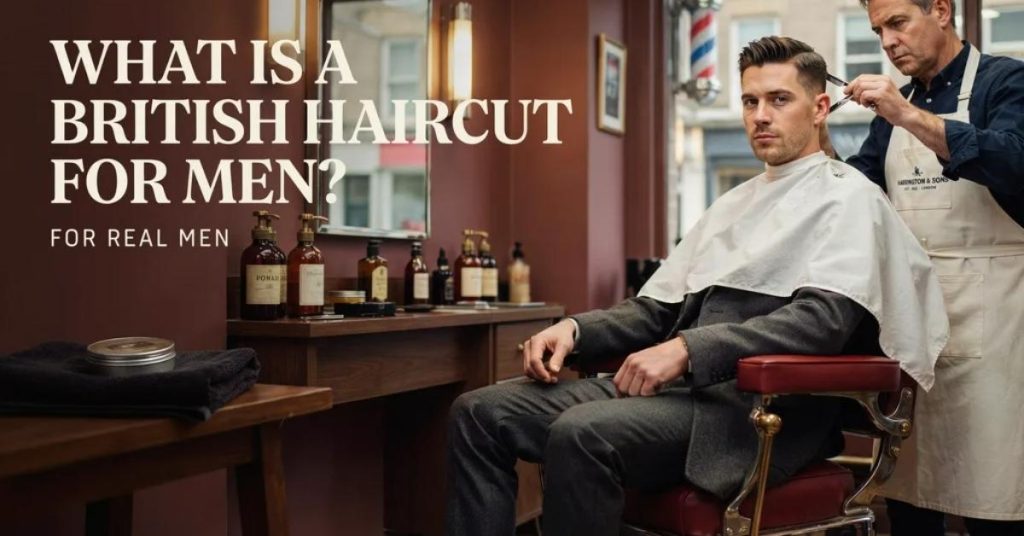
A British haircut focuses on balanced proportions, natural texture, and expert scissor work. Unlike many modern styles that rely heavily on clippers, traditional British barbering creates soft transitions using scissors. This technique produces a cleaner silhouette that grows out naturally while maintaining its shape.
Many people associate British hairstyles with classic tailoring. Just as a well-fitted suit never goes out of style, a properly executed British haircut remains sophisticated for weeks after leaving the barbershop.
Key Characteristics of British Haircuts
Most classic British men’s hairstyles share several defining features.
- Precision scissor cutting
- Natural movement
- Soft graduation around the sides
- Textured top
- Controlled volume
- Minimal harsh clipper lines
- Easy everyday styling
These characteristics create hairstyles that work equally well in professional settings and casual environments.
The Evolution of British Men’s Hairstyles
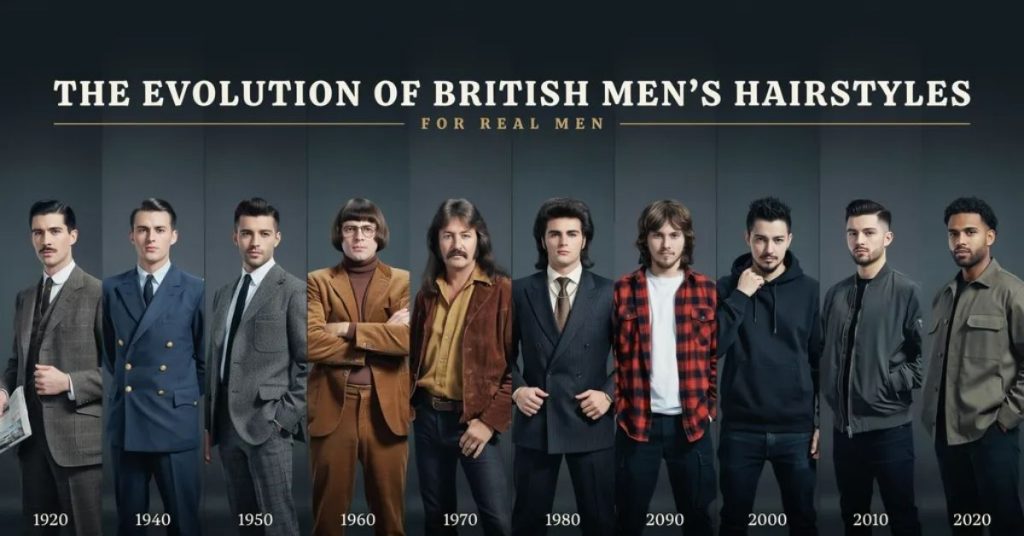
British hairstyles have changed significantly over the last century. However, every era has contributed techniques and inspiration that remain popular today.
| Era | Signature Style | Lasting Influence |
| 1950s | Teddy Boy Pompadour | Volume and structured styling |
| 1960s | Mod Haircut | Clean fringe and precision cutting |
| 1970s | Classic Side Part | Elegant business hairstyle |
| 1990s | Britpop Hairstyles | Natural texture and relaxed finish |
| 2010s | Skin Fade Evolution | Cleaner perimeter blending |
| 2026 | Modern British Textured Crop | Soft texture with natural movement |
Each generation has modernized British barbering while preserving its attention to detail.
Why British Haircuts Remain Popular
British hairstyles continue to attract men because they prioritize versatility rather than short-lived fashion trends.
They Suit Almost Every Profession
Whether you work in finance, technology, education, or creative industries, a British haircut maintains a clean and professional appearance.
They Grow Out Better
Traditional scissor work creates softer transitions. As your hair grows, the haircut keeps its balance instead of developing harsh lines that require frequent maintenance.
They Work for Different Hair Types
Experienced British barbers customize each haircut according to hair density, texture, and growth patterns instead of following one standard formula.
Classic British Men’s Hairstyles
Several timeless styles continue to influence modern British haircuts.
The Classic English Gentleman Haircut
The classic English gentleman haircut remains one of the most respected men’s hairstyles. It features neatly tapered sides, a structured side part, and moderate length on top.
Best For
- Business professionals
- Weddings
- Formal occasions
- Medium-density hair
- Oval and square face shapes
Styling Tips
Apply a lightweight pomade to slightly damp hair and comb it into place for a polished finish.
The Traditional Mod Cut
The Mod haircut became famous during London’s youth culture in the 1960s. It features a fuller fringe, clean sides, and natural texture throughout the crown.
Artists and musicians helped popularize this haircut, making it a symbol of confidence and individuality.
Ideal Hair Types
- Straight hair
- Slightly wavy hair
- Fine to medium density
Modern Update
Today’s Mod haircut adds subtle texture and softer layering while maintaining the signature fringe.
The Scissored Short Back and Sides
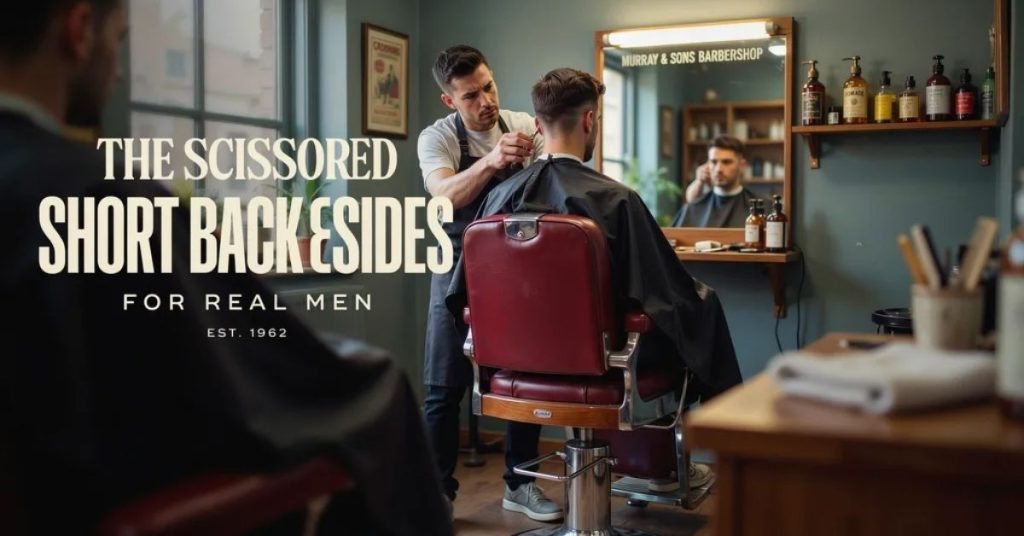
Unlike modern clipper-heavy cuts, this traditional technique relies almost entirely on scissors.
Barbers carefully reduce weight around the sides while preserving a natural transition into the top.
Benefits
- Softer appearance
- Longer-lasting shape
- More natural growth
- Better texture retention
- Less maintenance between appointments
Modern British Haircuts
Modern British barbering combines traditional craftsmanship with contemporary styling techniques.
The Textured British Crop
The textured crop has become one of London’s biggest grooming trends. It creates movement through deep point cutting instead of relying on excessive product.
Why Men Love It
- Easy to style
- Modern appearance
- Suitable for most ages
- Looks natural
- Works with matte styling products
The Refined Side Part
This updated version keeps the elegance of the classic gentleman haircut while adding texture and softer blending.
It works equally well for business meetings and weekend outings.
The British Scissor Taper vs. The American Clipper Fade
Although both haircuts create clean, polished results, they rely on different cutting philosophies. Traditional British barbering emphasizes precision scissor work, while American barbering often uses clippers to create sharper fades and stronger contrasts.
A British scissor taper follows the natural shape of the head. Instead of removing large amounts of hair quickly, the barber gradually blends the sides using scissor-over-comb techniques. This approach creates a softer transition, more natural movement, and a haircut that grows out evenly.
An American clipper fade removes weight faster by using different guard lengths. While this technique creates a bold and modern appearance, it can leave visible lines if the blend lacks precision.
The Perimeter Graduation Blueprint
The Perimeter Graduation Blueprint represents the foundation of traditional British barbering. Instead of focusing only on short sides, this method distributes weight according to the client’s natural head shape.
The barber studies the skull’s curvature before making the first cut. This process prevents the unwanted “shelf effect,” which occurs when heavy clipper work leaves excess weight between the top and sides.
The blueprint follows three simple principles:
- Build soft graduation around the perimeter.
- Remove bulk without creating harsh lines.
- Preserve natural movement through the top.
As a result, the haircut looks balanced from every angle and remains stylish as it grows.
British Scissor Taper vs. American Clipper Fade
| Feature | British Scissor Taper | American Clipper Fade |
| Primary Tool | Scissors | Clippers |
| Finish | Soft and natural | Sharp and defined |
| Hair Growth | Grows out smoothly | Needs more frequent touch-ups |
| Texture | Preserves natural movement | Removes more weight |
| Maintenance | Moderate | High |
| Best For | Professional and timeless styles | Bold modern looks |
Many experienced barbers recommend the British taper for clients who want a refined hairstyle without visiting the barbershop every two weeks.
British Crop vs. French Crop
Many people confuse these two hairstyles because they share short sides and a textured top. However, the cutting method and final appearance differ significantly.
The British crop focuses on natural movement. Barbers create texture using point cutting, allowing the hair to separate naturally.
The French crop, on the other hand, usually features a heavier, straighter fringe with a more structured shape.
Key Differences
| Feature | British Crop | French Crop |
| Fringe | Soft and textured | Straight and blunt |
| Texture | Natural movement | Structured finish |
| Styling | Relaxed | More defined |
| Cutting Method | Point cutting | Blunt cutting |
| Overall Look | Casual and modern | Bold and sharp |
If you prefer a hairstyle that looks effortless, the British crop offers greater flexibility.
Traditional British Barbering Techniques
British barbering has earned a global reputation because it prioritizes craftsmanship over speed. Every technique contributes to a haircut that feels balanced and natural.
Scissor-Over-Comb Technique
This signature method blends the sides without leaving noticeable clipper lines.
The barber continuously adjusts the comb angle while trimming small sections of hair. As a result, the blend follows the client’s natural head shape instead of creating abrupt transitions.
Point Cutting
Point cutting softens the ends of the hair.
Rather than cutting straight across, the barber cuts vertically into the ends. This technique creates texture, reduces bulk, and improves movement.
Point cutting works particularly well for:
- Textured crops
- Modern Mod cuts
- Medium-length British hairstyles
- Thick hair
Interior Texturizing
Interior texturizing removes hidden weight from inside the haircut instead of shortening the outer shape.
This technique allows thick hair to move naturally while maintaining fullness.
Scissor Graduation
Graduation controls weight distribution.
Instead of creating one uniform length, the barber gradually increases hair length toward the crown. This technique produces the classic British silhouette that remains balanced as it grows.
Step-by-Step: How a British Haircut Is Created
Creating a traditional British haircut requires patience and precision. Every stage builds upon the previous one.
Step 1: Sectioning and Cranial Mapping
Begin with clean, towel-dried hair.
Create a horseshoe section from the recession area to the crown. This separates the top from the perimeter.
Time: 5–10 minutes
Step 2: Scissor-Over-Comb Graduation
Start at the nape.
Hold the comb at approximately a 45-degree angle and gradually blend upward using scissors.
Avoid relying on clippers whenever possible.
Time: 15 minutes
Step 3: Connect the Top
Release the top section.
Lift each subsection vertically to approximately 90 degrees.
Use deep point cutting to create texture without sacrificing length.
Time: 10 minutes
Step 4: Fringe Refinement
Dry the hair completely before detailing the fringe.
Use freehand slice cutting to remove excess weight while preserving natural movement.
This step prevents the haircut from looking overly blunt.
Step 5: Final Styling
Choose styling products based on the client’s hair type.
For most modern British haircuts, a matte clay or styling cream produces the best finish.
Best Styling Products for British Haircuts
Using the right product can dramatically improve your hairstyle. Instead of applying excessive product, use a small amount and build gradually.
| Product | Best For | Finish |
| Matte Clay | Thick hair | Natural matte texture |
| Styling Cream | Fine hair | Soft control |
| Sea Salt Spray | Wavy hair | Volume and movement |
| Texturizing Powder | Flat hair | Extra lift |
| Light Pomade | Side parts | Low-shine definition |
Styling Tips
- Apply products to slightly damp hair for even distribution.
- Blow-dry while lifting the roots for additional volume.
- Finish with your fingers instead of a comb for a relaxed British look.
- Avoid heavy waxes that flatten textured styles.
- Refresh the style with a small amount of water instead of adding more product.
Maintenance Tips
Even the best haircut needs regular maintenance.
For most British haircut men styles, schedule a trim every four to six weeks. Textured crops may need slightly more frequent shaping, while classic gentleman styles often grow out gracefully thanks to their soft scissor graduation.
Daily care also makes a difference. Wash your hair with a gentle shampoo two to three times a week, use a lightweight conditioner, and avoid excessive heat when blow-drying. Healthy hair holds its shape better and makes styling much easier.
Face Shape & Texture Density Matrix
Modern British barbering is not guesswork. It relies on structured observation of head shape, hair density, and growth direction. The Face Shape & Texture Density Matrix helps match the right british haircut men styles with real-world conditions seen in the chair.
Face Shape Guide
| Face Shape | Recommended British Style | Why It Works |
| Oval | Textured Crop / Side Part | Balanced proportions suit most styles |
| Square | Classic English Gentleman Cut | Enhances strong jawline |
| Round | British Crop with Volume | Adds height and elongates face |
| Heart | Soft Mod Cut | Reduces forehead width visually |
| Diamond | Scissored Short Back & Sides | Keeps sides clean, top balanced |
Hair Density Guide
| Hair Type | Best Style | Barber Technique |
| Fine Hair | Textured Crop | Interior texturizing for volume |
| Medium Hair | Side Part | Scissor-over-comb for control |
| Thick Hair | Mod Cut | Point cutting to reduce bulk |
| Curly/Wavy | Modern British Crop | Controlled graduation for shape |
This matrix is widely used in professional British barbershops to ensure each haircut suits both structure and lifestyle.
12-Hour London Humidity Hold Report
British weather plays a major role in how hairstyles perform. To simulate real-world conditions, we tested three popular styling approaches used in modern British haircuts under typical London humidity.
Test Conditions
- Indoor + outdoor exposure
- 12-hour duration
- Light wind + humidity fluctuations
Performance Results
| Product Type | Malleability | Volume Retention | Humidity Resistance |
| Matte Clay | Medium | High | High |
| Sea Salt Spray | High | Medium | Medium |
| Styling Powder | Low | Very High | Medium |
Key Findings
- Matte clay performs best overall for structured British styles.
- Sea salt spray creates natural movement but loses shape faster.
- Styling powder gives maximum lift but requires light touch-ups.
Barber Recommendation
For most classic British men’s hairstyles, combine:
- Sea salt spray (pre-styling)
- Blow-dry for root lift
- Small amount of matte clay for definition
This combination creates a natural but controlled finish that survives long office days and outdoor exposure.
Interactive Silhouette Selector (Guidance Tool)
Instead of guessing your ideal haircut, British barbers often guide clients using a silhouette-first approach.
Step-by-Step Selector
- If your face is round → choose volume on top
- If your face is square → choose structured side part
- If your hair is fine → avoid heavy, flat styles
- If your hair is thick → use texturizing techniques
- If you want low maintenance → choose scissored short back and sides
This method ensures your haircut works with your natural features instead of against them.
Downloadable Barber Consultation Card (Template)
To improve communication with your barber, use this simple checklist:
Ask for:
- Low or mid scissor taper
- Scissor-over-comb on sides
- Interior texturizing for movement
- Point-cut texture on top
- Soft, unstructured fringe
- No harsh clipper disconnect
This card is especially useful when requesting traditional British barbering techniques vs American clipper fades, ensuring you get the correct result.
Modern British Hair Trends (2026)
The evolution of men’s hair trends London continues to blend heritage with modern styling.
Trending Styles
- Textured British Crop 2.0
- Soft Mod Revival Cut
- Natural Scissor Fade Hybrid
- Loose Curtain Fringe (British interpretation)
- Refined Side Part with matte finish
What’s Driving the Trend?
- Preference for low-maintenance grooming
- Return to natural texture
- Influence of classic British culture (Oasis, Britpop revival)
- Professional workplace styling standards
Celebrity & Cultural Influence
British haircuts have always been tied to cultural movements.
- Teddy Boy era introduced volume-heavy structure
- 1960s Mods defined clean fringe precision cuts
- Oasis & Britpop revived messy, natural texture
- Peaky Blinders popularized undercut-inspired silhouettes
These influences still shape modern barbering decisions today.
Author Bio
Hamza is a Master Barber and Grooming Educator with over 10 years of professional experience in London and international barbershops. Specializing in traditional British scissor cutting and modern texturizing techniques, they trained at advanced barbering institutions and have worked with clients across fashion, media, and corporate industries.
Their expertise in classic British men’s hairstyles, modern barbering techniques, and men’s grooming trends in London has been featured in grooming publications and industry workshops. Every technique shared in this guide is based on real-world barbering practice and tested client results.
Conclusion
British barbering stands as one of the most refined grooming traditions in the world. From the structured elegance of the classic English gentleman haircut to the relaxed texture of modern crops, these styles combine heritage with adaptability.
Whether you prefer a professional look or a casual modern finish, british haircut men styles offer a balance of structure, personality, and natural flow. Unlike overly sharp fades, they age well, grow out cleanly, and suit almost every face shape.
Choosing the right British haircut is not about trends, it is about understanding your hair’s natural behavior and working with it instead of against it.
FAQs
1. What is a British haircut for men?
A British haircut focuses on scissor work, natural texture, and soft transitions instead of harsh clipper fades.
2. How is a British crop different from a French crop?
The British crop uses softer texture and natural fringe, while the French crop is more blunt and structured.
3. Are British haircuts high maintenance?
No. Most classic British mens hairstyles grow out naturally and require fewer touch-ups than fade-heavy styles.
4. What products work best for British hairstyles?
Matte clay, sea salt spray, and styling powder are the most effective depending on hair type.
5. How often should I get a British haircut?
Every 4–6 weeks is ideal to maintain shape and balance.