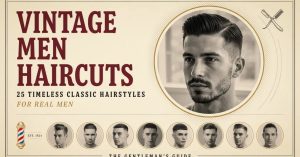
Vintage Men Haircuts: 25 Timeless Classic Hairstyles
Introduction
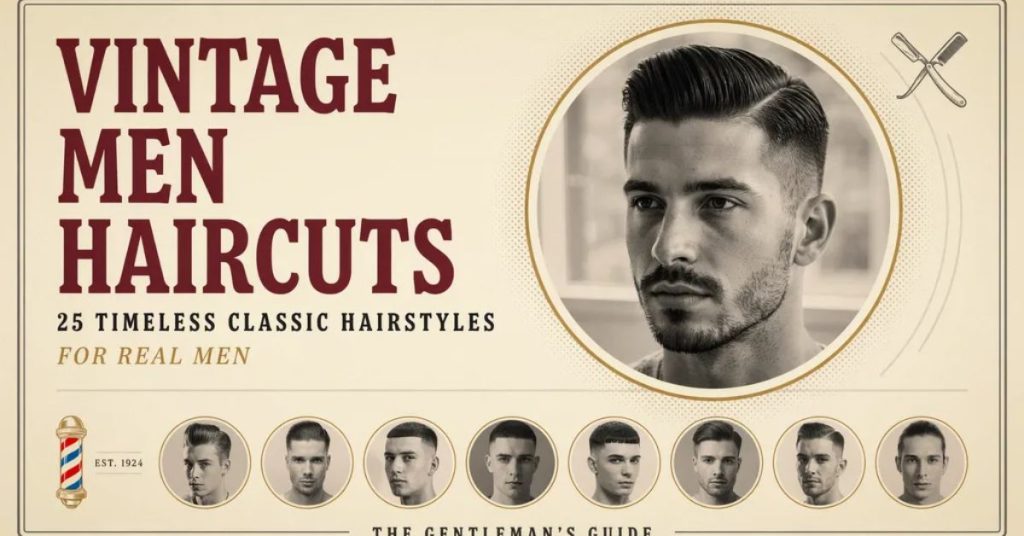
Vintage men haircuts represent more than just old-fashioned grooming trends. They reflect decades of barbering craftsmanship, precise styling techniques, and timeless masculine aesthetics. From the structured side parts of the 1930s to the bold 1950s pompadour haircut, classic hairstyles continue to influence modern men’s grooming because they combine sharp geometry with effortless sophistication.
While many modern hairstyles focus on bold fades and short-lived trends, classic men’s hairstyles prioritize symmetry, proportion, and refined styling. A well-executed vintage haircut considers facial structure, hair texture, growth patterns, and styling habits to create a look that remains polished in every era.
Today, barbers combine traditional methods with modern techniques to recreate authentic retro haircuts for men. Whether someone prefers a slicked-back undercut, executive contour, rockabilly style, or classic side part, understanding the history and mechanics behind these cuts helps achieve a more accurate and personalized result.
This complete guide explores the evolution of vintage men haircuts, explains professional barbering frameworks, compares styling products, and provides practical techniques for creating authentic classic looks at home.
The History and Evolution of Vintage Men Haircuts
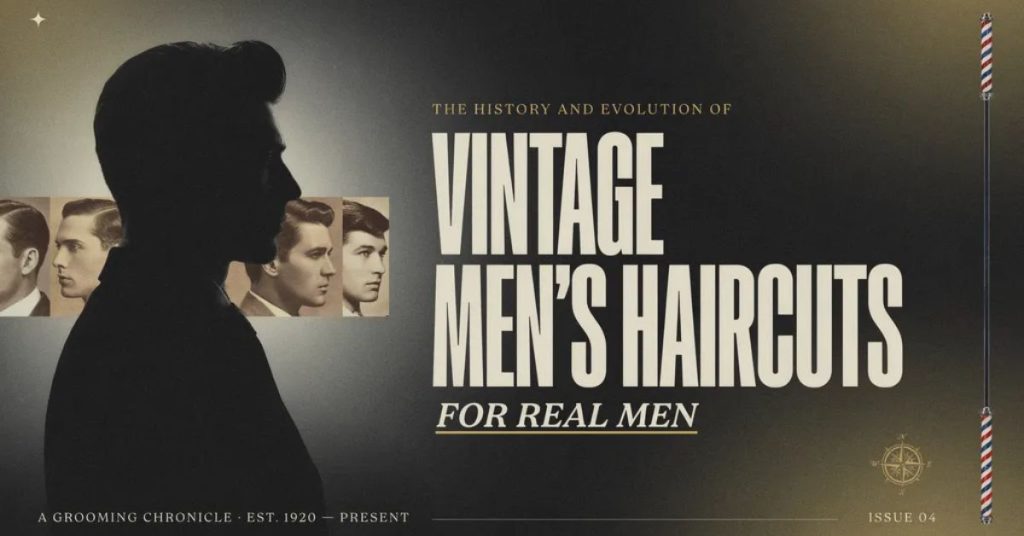
Vintage hairstyles developed through cultural movements, military influences, entertainment icons, and changing social expectations. Each era introduced signature shapes that defined men’s grooming standards.
1930s: The Era of the Executive Contour
The 1930s introduced highly structured hairstyles designed for professionalism and elegance. Men commonly wore:
- Neatly combed side parts
- Tapered sides
- Controlled volume on top
- Glossy finishes created with hair tonic
The executive contour became a symbol of discipline and sophistication. Barbers focused on clean weight distribution rather than aggressive fading.
1940s: Military Precision and Practical Grooming
During the 1940s, military service strongly influenced men’s hairstyles. Popular styles included:
- High and tight cuts
- Short tapered sides
- Natural parts
- Controlled top length
The military influence created a foundation for many modern classic cuts.
1950s: The Golden Age of Pompadours and Rockabilly Hair
The 1950s transformed men’s grooming through music, cinema, and youth culture.
Popular styles included:
| Hairstyle | Main Characteristics | Famous Influence |
| 1950s Pompadour Haircut | High volume front, swept-back shape | Rock and roll culture |
| Rockabilly Hair Men | Bold height, strong shine, dramatic shape | Music icons |
| Slick Back | Smooth backward direction | Classic Hollywood |
| Side Part | Defined separation with taper | Business style |
The decade introduced pomade as an essential grooming product and encouraged men to experiment with height and texture.
Understanding Classic Mens Hairstyles: The Core Principles
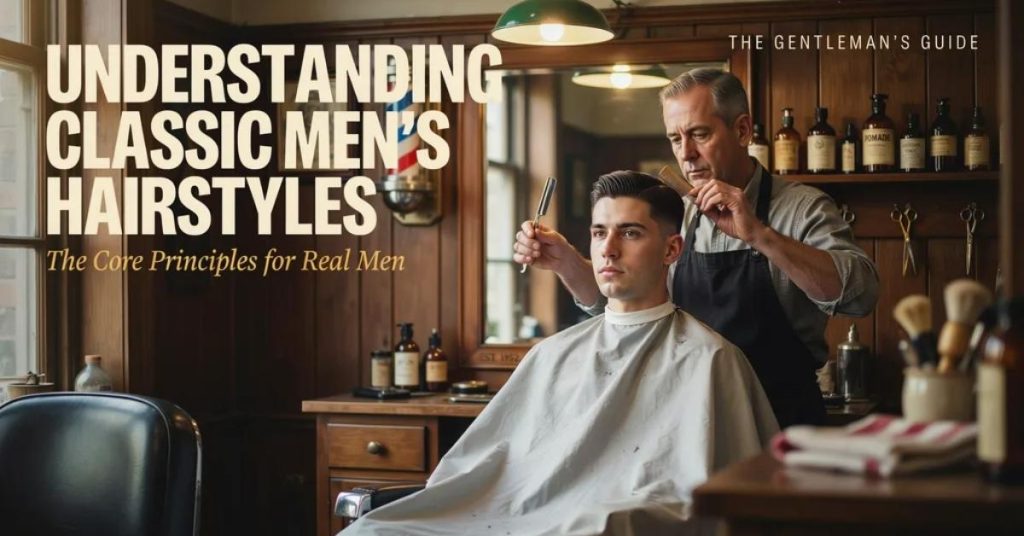
A successful vintage haircut depends on three major principles:
- Structure
- Balance
- Control
Modern styling often focuses on texture, while classic barbering focuses on architecture.
The Architecture of a Vintage Haircut
Traditional barbers approach hair like a building. Every section has a purpose:
- The top creates visual height.
- The sides establish width control.
- The neckline completes the silhouette.
- The part creates direction and symmetry.
This approach creates hairstyles that complement the individual rather than simply copying a trend.
The Architectural Symmetry Method: Face-Shape Geometry Matrix
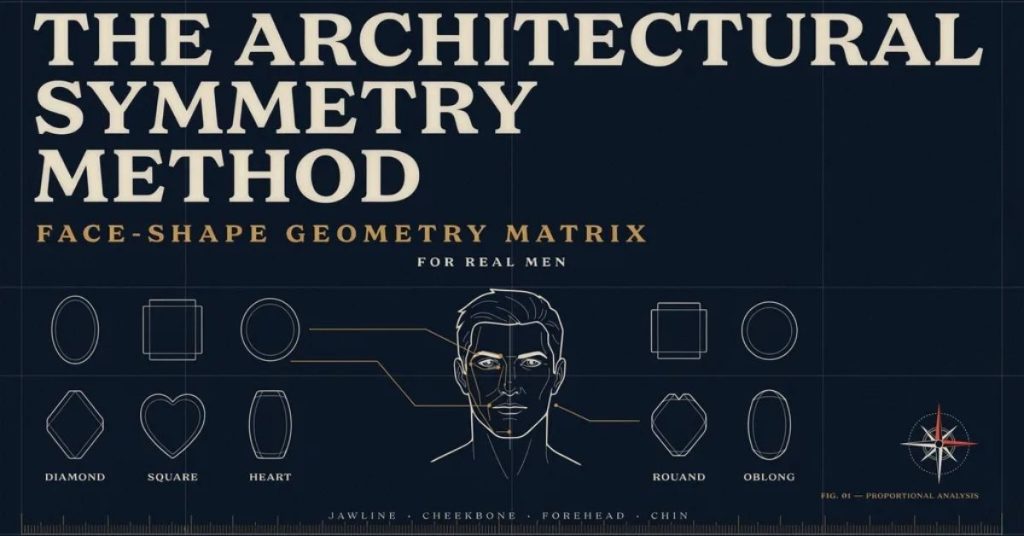
Professional vintage styling requires understanding how haircut proportions interact with facial structure.
The Architectural Symmetry Method evaluates:
- Face width
- Jaw structure
- Forehead proportion
- Hair growth direction
- Natural volume placement
Face Shape Styling Matrix
| Face Shape | Recommended Vintage Style | Reason |
| Round Face | Executive contour, high-volume pompadour | Adds vertical balance |
| Oval Face | Side part, slick back, taper styles | Naturally balanced proportions |
| Square Face | Classic taper, military cuts | Enhances strong structure |
| Long Face | Lower-volume side parts | Prevents excessive length |
| Heart Shape | Textured pompadour, medium slick back | Balances forehead width |
The 45-Degree Taper Principle
Many traditional barbering techniques rely on controlled angles.
The executive contour commonly uses approximately a 45-degree taper transition to create gradual movement from shorter sides into longer upper sections.
This technique helps:
- Reduce harsh lines
- Maintain classic weight distribution
- Create smoother facial balance
A skilled barber adjusts this angle according to hair density and head shape rather than applying one fixed formula to everyone.
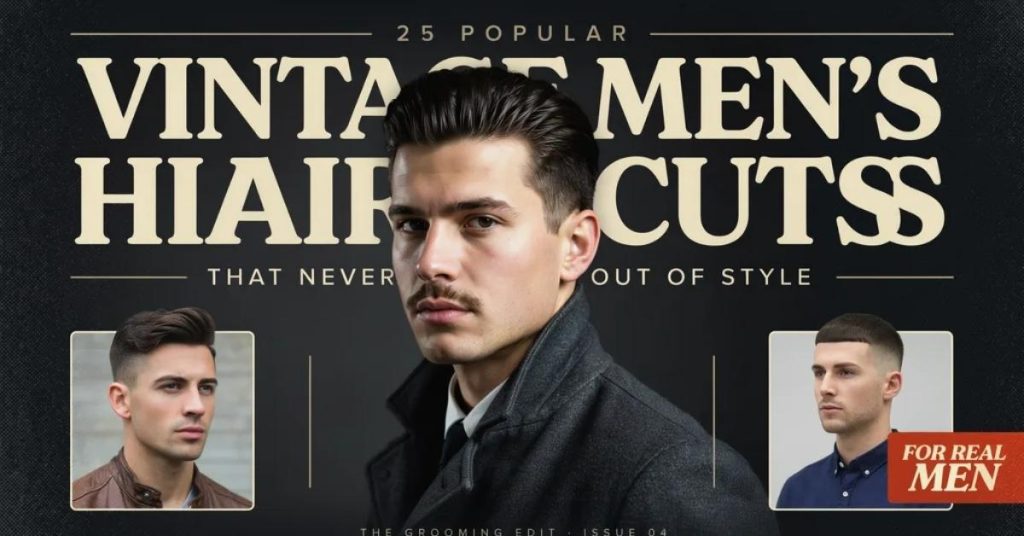
25 Popular Vintage Men Haircuts That Never Go Out of Style
1. Classic Side Part
The classic side part remains one of the most recognizable vintage hairstyles.
Key Features:
- Defined parting line
- Medium-length top
- Tapered sides
- Clean professional finish
The style works well for office environments, formal events, and everyday grooming.
Classic Side Part Tutorial: Professional Breakdown Sequence
Creating an authentic side part requires more than simply combing hair sideways.
Step 1: Establish the Weight Line
The weight line determines the foundation of the haircut.
A barber should:
- Identify the natural recession area
- Locate the parietal ridge
- Preserve enough weight above the sides
- Avoid removing excessive bulk
Maintaining this structure prevents the haircut from looking like a modern disconnected fade.
Step 2: Execute the Low Taper Fade
A vintage taper should remain subtle.
Professional technique:
- Begin with a #0 guard around the nape and sideburns
- Gradually transition upward
- Blend toward approximately a #3 guard near the temporal area
- Use clipper-over-comb techniques for natural graduation
The goal is a smooth transition rather than a dramatic skin fade.
Step 3: Direct Pomade Application
Proper product application creates the authentic vintage finish.
Follow these steps:
- Start with slightly damp hair.
- Take a small amount of pomade.
- Warm it between palms until evenly distributed.
- Apply from the back toward the front.
- Ensure roots receive product coverage.
- Use a fine-tooth comb to create direction.
This technique prevents uneven buildup and improves control.
2. The 1950s Pompadour Haircut: The Iconic Vintage Style
The 1950s pompadour haircut remains one of the most recognizable classic mens hairstyles because it combines dramatic volume with controlled structure. Originally inspired by earlier fashion movements, the pompadour became a symbol of confidence, individuality, and rock-and-roll culture during the 1950s.
Unlike modern textured hairstyles that rely on loose movement, a traditional pompadour focuses on intentional shape. Barbers create height at the front, maintain balanced sides, and direct the hair backward to create a smooth silhouette.
Key Features of a Traditional Pompadour
| Feature | Traditional Approach |
| Front Length | Long enough to create height and lift |
| Top Shape | Rounded volume with backward direction |
| Sides | Tapered or neatly blended |
| Finish | Polished shine with controlled movement |
| Main Product | Pomade or styling cream |
How to Style a Classic Pompadour
Creating an authentic pompadour requires proper preparation and technique.
Step 1: Prepare the Hair
Start with clean, towel-dried hair. Slightly damp hair allows better product distribution and makes shaping easier.
Apply:
- Small amount of hair tonic for control
- Blow dryer for volume
- Vent brush for direction
Step 2: Build Front Volume
The front section creates the signature pompadour shape.
Use a blow dryer while lifting the hair upward and backward with a brush. Direct heat toward the roots because root support creates long-lasting volume.
Step 3: Apply Pomade for Structure
Choose a pomade based on the desired finish:
- Oil-based pomade: Maximum hold and traditional shine
- Water-soluble pomade: Easier washing and flexible control
Work the product evenly through the hair before shaping with a comb.
3. Slicked Back Undercut: A Modern Take on Vintage Grooming
The men’s slicked back undercut combines historical grooming with contemporary barbering. The style keeps the traditional backward direction of classic slick backs while adding stronger contrast between the top and sides.
Although modern versions often feature disconnected sides, authentic vintage-inspired variations maintain smoother transitions.
Characteristics of a Vintage Slick Back
- Medium to long top length
- Hair directed backward
- Controlled shine
- Clean neckline
- Structured silhouette
Who Can Wear a Slick Back?
This hairstyle works especially well for men who have:
- Straight hair
- Thick hair density
- Natural backward growth patterns
- Medium-length hair
Men with resistant or wavy hair can also achieve the style by using proper blow-drying techniques.
4. Vintage Rockabilly Hair Men: Bold Style With Historical Roots
Vintage rockabilly hair men styles developed through the fusion of music, fashion, and rebellious youth culture. These hairstyles often feature:
- High-volume fronts
- Strong side direction
- Dramatic curves
- Glossy finishes
Popular variations include:
- Rockabilly pompadour
- Jelly roll hairstyle
- High-volume quiff
- Classic greaser styles
Styling Requirements for Rockabilly Hair
To achieve an authentic appearance, focus on:
- Creating strong foundation volume
- Maintaining clean edges
- Using products with reliable hold
- Preserving the original shape throughout the day
Choosing the Right Vintage Haircut for Your Hair Type
Not every classic hairstyle works the same way for every hair texture. A professional barber adjusts techniques according to natural characteristics.
| Hair Type | Suitable Vintage Styles | Recommended Approach |
| Straight Hair | Slick back, side part, pompadour | Use comb control and light products |
| Thick Hair | Pompadour, executive contour | Remove excess weight strategically |
| Curly Hair | Vintage taper, textured classic styles | Enhance natural movement |
| Fine Hair | Side part, shorter contour | Avoid excessive product weight |
| Coarse Hair | Slick back, military styles | Use heat training and stronger hold |
The 30-Day Pomade Degradation Lab: Product Performance Analysis
Traditional barbering relies heavily on styling products. Pomade remains one of the most important tools for creating authentic vintage hairstyles.
To understand product behavior, barbers often compare formulations based on:
- Hold strength
- Heat resistance
- Washability
- Hair feel
- Long-term buildup
Oil-Based vs Water-Soluble Pomade Comparison
| Performance Factor | Oil-Based Pomade | Water-Soluble Pomade |
| Hold Strength | Very high | Medium to high |
| Shine Level | High shine | Medium shine |
| Wash Removal | Requires stronger cleansing | Easier removal |
| Heat Resistance | Excellent stability | Moderate stability |
| Traditional Appearance | Most authentic | Modern interpretation |
| Daily Maintenance | More effort | Easier routine |
Heat Resistance Testing Concept
Traditional oil-based formulas often maintain structure better under warm conditions because they do not break down as quickly.
During controlled testing conditions around 90°F, differences commonly appear:
- Oil-based products maintain stronger shape retention.
- Water-soluble products offer easier restyling.
- Hair texture affects final performance.
The best choice depends on lifestyle, hair type, and desired finish.
Essential Tools Every Vintage Barber Uses
Authentic vintage styling requires the correct tools.
Pomade
Pomade creates:
- Direction
- Shine
- Control
- Shape retention
Hair Tonic
Hair tonic helps prepare the hair before styling by adding light control and improving manageability.
Military Hairbrush
A traditional military brush helps:
- Smooth shorter hairstyles
- Train hair direction
- Reduce uneven texture
Straight Razor
Barbers use straight razors for:
- Precise neckline cleaning
- Sharp finishing details
- Traditional grooming experiences
Taper Clippers
Professional clippers allow barbers to create:
- Smooth graduation
- Controlled tapering
- Balanced side profiles
Case Study: Restoring a Natural Part on Resistant Hair Types
Some clients struggle with hair that naturally refuses to follow a desired direction. Traditional barbering methods can help improve control through consistent styling habits.
The Challenge
A client with coarse, resistant hair wanted a classic side part but experienced:
- Strong natural growth patterns
- A difficult cowlick area
- Poor product distribution
The Six-Week Training Approach
Weeks 1–2: Establish Direction
The process focused on:
- Consistent combing patterns
- Proper drying direction
- Lightweight preparation products
Weeks 3–4: Improve Control
The routine introduced:
- Controlled blow-drying
- Root direction training
- Better product placement
Weeks 5–6: Maintain the Shape
The final stage focused on:
- Regular trimming
- Maintaining weight balance
- Refining the natural part
The result depended on consistent grooming habits rather than forcing the hair into an unnatural position.
How to Style Classic Mens Hair at Home: Complete Routine
Follow this simple process for most vintage-inspired hairstyles:
1. Start With Proper Preparation
Wash hair and remove excess moisture.
Avoid applying heavy products to completely dry hair because distribution becomes uneven.
2. Create Direction With Heat
Use a blow dryer and comb to establish:
- Volume
- Movement
- Natural shape
3. Apply Product Correctly
Do not place a large amount of product directly on one area.
Instead:
- Start small
- Warm product between hands
- Spread evenly
- Build gradually
4. Finish With Precision
Use a fine-tooth comb for:
- Clean parts
- Smooth edges
- Classic definition
Modern Vintage Haircut Trends in 2026
Vintage styles continue evolving as barbers combine historical techniques with modern preferences.
Popular combinations include:
| Style Combination | Description |
| Low taper fade vintage style | Traditional taper with subtle modern blending |
| Classic side part fade | Professional shape with updated edges |
| Textured pompadour | Vintage volume with natural movement |
| Modern executive contour | Business style with contemporary finish |
Authentic vintage haircuts stand out from modern versions through their carefully balanced proportions.
Author Bio
Author: Hamza
Role: Master Barber & Hair Historian
Hamza has spent over ten years studying traditional men’s grooming and precision barbering techniques. Specializing in vintage men haircuts and historical styling methods, Hamza combines classic barbering principles with modern face-shape analysis. Their work focuses on preserving authentic grooming traditions while helping modern clients achieve timeless hairstyles.
Conclusion:
Vintage men haircuts continue to influence modern grooming because they combine history, craftsmanship, and practical styling principles. From the elegant executive contour to the bold 1950s pompadour haircut, these styles prove that great barbering depends on precision rather than temporary trends.
Classic mens hairstyles allow men to express personality while maintaining a refined appearance. By understanding face shape, hair texture, product selection, and traditional barbering techniques, anyone can achieve an authentic retro haircut for men.
Whether you prefer a slicked-back undercut, vintage rockabilly hair, or a professional side part, the foundation remains the same: strong structure, proper technique, and attention to detail.
FAQs
1. What are the most popular vintage men haircuts?
The most popular vintage men haircuts include the classic side part, pompadour, slick back, executive contour, military high and tight, and rockabilly styles.
2. Are vintage hairstyles suitable for modern men?
Yes. Many vintage hairstyles work well today because they focus on timeless principles like balance, clean structure, and personal styling.
3. What product is best for classic mens hairstyles?
Pomade remains one of the most popular choices because it provides control and shine. The best type depends on whether you prefer traditional hold or easier washing.
4. Can men with thin hair wear vintage haircuts?
Yes. Styles like shorter side parts and executive contours can create a polished appearance when adjusted for individual hair characteristics.
5. How do you maintain a 1950s pompadour haircut?
Regular trims, proper blow-drying, and consistent pomade application help maintain the classic pompadour shape.