Haircut Neckline Men: Best Neckline Styles & Barber Guide
Introduction
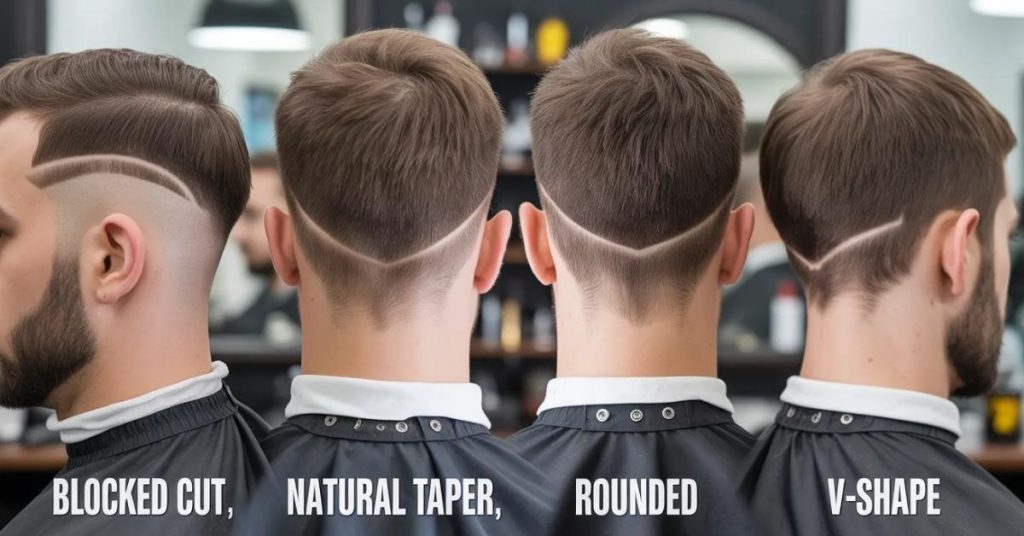
A great haircut does not end at the fade, taper, or texture on top. The neckline plays a major role in how polished the haircut looks from every angle. Many men focus only on the front profile, but barbers know the neckline determines whether a haircut looks professionally finished or rushed.
The right haircut neckline for men can sharpen the jawline, balance facial structure, improve neck proportions, and even change how thick or slim the neck appears. A clean neckline also affects how long the haircut stays fresh between appointments. Small adjustments in the perimeter line can completely change the overall appearance of a style.
Modern barbering has evolved far beyond simple straight lines. Today’s professionals analyze growth patterns, head shape, cowlick direction, occipital bone structure, and neckline symmetry before choosing a finish. Whether you prefer a natural taper, a sharp blocked neckline, or a rounded perimeter, understanding these details helps you make better grooming decisions.
This guide explains everything about haircut neckline men styles, including blocked vs tapered neckline designs, rounded necklines, neckline maintenance, growth patterns, face-shape matching, DIY trimming methods, and professional barber techniques used in elite barbershops.
What Is a Haircut Neckline?
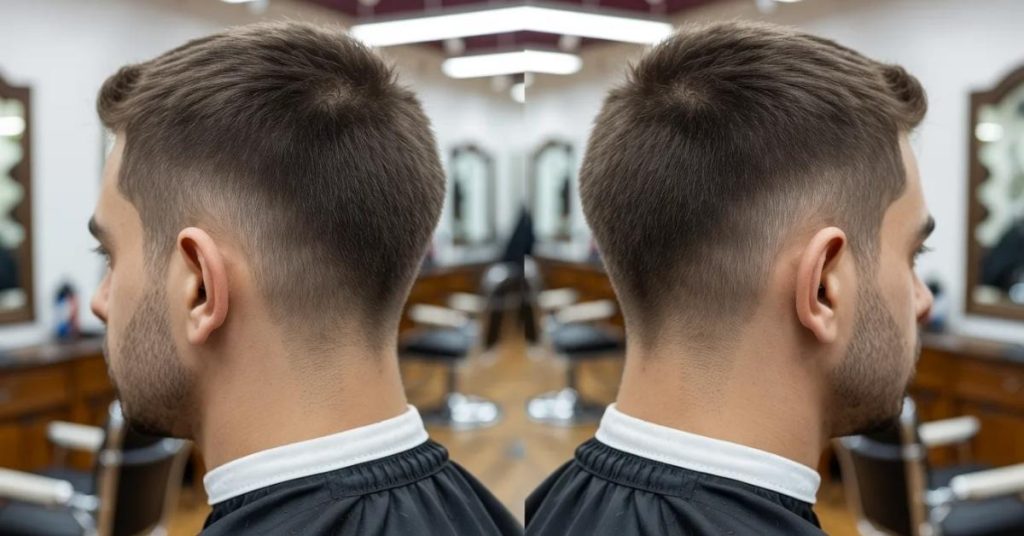
A haircut neckline is the finishing shape created at the back of the neck where the haircut ends. It defines the lower perimeter of the haircut and creates the transition between the hair and skin.
The neckline controls:
- Haircut balance
- Symmetry
- Neck appearance
- Haircut longevity
- Overall cleanliness
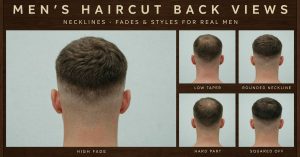
Barbers usually create three primary neckline styles:
- Blocked neckline
- Tapered neckline
- Rounded neckline
Each option creates a completely different visual effect.
Why the Neckline Matters More Than Most Men Realize

The neckline is one of the first things people notice from behind. A poorly shaped neckline can make even an expensive haircut look uneven.
A professionally designed neckline:
- Improves facial proportions
- Enhances neck symmetry
- Creates cleaner fades
- Helps hairstyles look structured
- Makes haircuts last longer visually
Barbers often say:
“The neckline is the signature of the haircut.”
A sharp neckline communicates precision and grooming discipline.
The Three Main Men’s Neckline Types
Blocked Neckline
A blocked neckline creates a defined horizontal line across the back of the neck.
Characteristics
- Sharp corners
- Straight perimeter
- Structured appearance
- Strong geometric finish
Best For
- Long necks
- Slim neck structures
- Thick hair
- Classic haircuts
- Business hairstyles
Advantages
| Benefit | Explanation |
| Looks sharp immediately | Creates instant contrast |
| Strong structure | Adds width visually |
| Works with classic cuts | Excellent for side parts and crew cuts |
| Photographs well | Strong edges create definition |
Disadvantages
| Drawback | Reason |
| Grows out faster | Visible hairline appears quickly |
| Can look bulky | Especially on wide necks |
| Requires maintenance | Needs frequent cleanup |
Tapered Neckline
A tapered neckline gradually blends into the natural skin using clipper guards and blending techniques.
Characteristics
- Soft transition
- Natural appearance
- Longer-lasting cleanliness
- Blended perimeter
Best For
- Wide necks
- Athletic builds
- Skin fades
- Modern hairstyles
- Natural grooming aesthetics
Advantages
| Benefit | Explanation |
| Grows naturally | No harsh regrowth lines |
| Slims the neck | Creates elongation |
| Easier maintenance | Looks cleaner longer |
| Professional appearance | Works in every environment |
Disadvantages
| Drawback | Reason |
| Less dramatic | Softer visual effect |
| Requires blending skill | Harder for beginners |
| Less defined | Not ideal for geometric cuts |
Rounded Neckline
A rounded neckline curves gently around the corners instead of forming sharp edges.
Characteristics
- Soft curves
- Balanced appearance
- Hybrid finish
- Natural edge flow
Best For
- Angular jawlines
- Medium neck widths
- Traditional hairstyles
- Wavy hair textures
Advantages
| Benefit | Explanation |
| Softens facial structure | Balances sharp jawlines |
| Looks natural | Blends well with classic styles |
| Less harsh regrowth | Cleaner over time |
| Works on many hair types | Flexible option |
Disadvantages
| Drawback | Reason |
| Can lose definition quickly | Curves blur faster |
| Requires symmetry | Uneven rounding becomes obvious |
Blocked vs Tapered Neckline: Which Is Better?
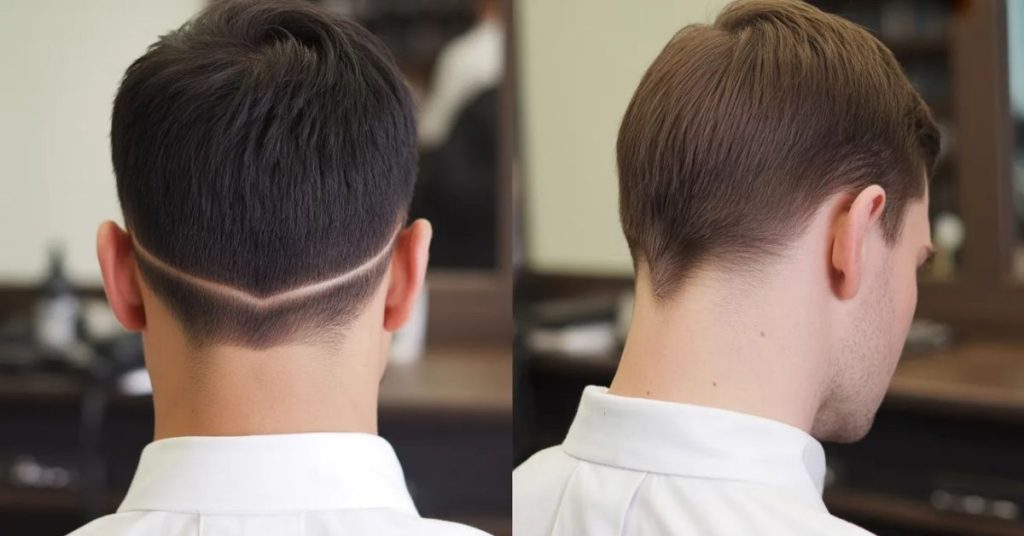
This is one of the most searched barbering questions online.
The answer depends on:
- Neck width
- Hair density
- Face shape
- Maintenance habits
- Hair growth direction
Quick Comparison Table
| Feature | Blocked | Tapered |
| Appearance | Sharp | Natural |
| Maintenance | High | Low |
| Grow-Out | Fast visible regrowth | Smooth grow-out |
| Neck Effect | Wider look | Slimmer look |
| Best Haircuts | Crew cuts, pompadours | Fades, textured crops |
| Barber Difficulty | Moderate | Advanced blending |
The “Three-Finger Rule” for Perfect Neckline Height
Professional barbers use anatomical landmarks to prevent cutting the neckline too high.
One advanced technique is the “Three-Finger Rule.”
Why Neckline Height Matters
A neckline cut too high:
- Makes the neck appear longer
- Destroys haircut balance
- Creates awkward regrowth
- Exposes uneven growth patterns
A neckline cut too low:
- Looks messy
- Reduces structure
- Makes fades appear unfinished
Step-by-Step Three-Finger Rule
Step 1: Locate the Base Reference Point
Find the natural neckline area nearby:
- Base of the skull
- Upper neck transition
- Occipital bone region
Step 2: Use Finger Measurement
Place:
- Index finger
- Middle finger
- Ring finger
Horizontally across the neck.
The upper boundary of the fingers becomes the maximum safe neckline height.
Step 3: Follow Natural Curvature
Never force straight lines against natural growth patterns.
Step 4: Blend Into the Haircut
Professional barbers soften the perimeter using:
- Trimmers
- Detailers
- Foil shavers
- Blending guards
Understanding Neck Hair Growth Patterns
Hair rarely grows perfectly downward.
Professional barbers study:
- Cowlicks
- Whorls
- Reverse growth
- Patch density
- Asymmetry
These growth patterns determine how the neckline should be shaped.
Case Study: Fixing Difficult Neckline Cowlicks
Some clients have extreme upward-growing neck hair.
This creates:
- Crooked neckline appearance
- Uneven regrowth
- Rapid perimeter distortion
Most beginners make the mistake of pushing the neckline too high.
That only worsens the problem.
The Directional Tapering Technique
Elite barbers use directional tapering to neutralize growth patterns.
How It Works
Instead of forcing a straight line:
- The barber studies growth direction
- The taper follows the natural angle
- Weight is removed gradually
- Transition lines soften irregular movement
Benefits
- Cleaner grow-out
- Less visible asymmetry
- Reduced crooked appearance
- Natural-looking neckline
Best Neckline for Different Face Shapes
Face geometry matters.
The neckline affects:
- Jawline perception
- Head proportions
- Neck balance
Round Face Shape
Best Neckline
- Tapered
- Low fade neckline
Why
These styles elongate the neck and slim the silhouette.
Avoid
- Heavy blocked lines
Square Face Shape
Best Neckline
- Rounded neckline
Why
Rounded edges soften aggressive angles.
Avoid
- Extremely sharp square lines
Oval Face Shape
Best Neckline
- Almost any neckline works
Recommended
- Medium taper
- Natural rounded finish
Diamond Face Shape
Best Neckline
- Blocked neckline
Why
Creates width at the lower head structure.
Neckline vs Jawline Symmetry Matrix
| Neck Shape / Structural Feature | Ideal Neckline Option | Optical Effect | Avoid |
| Short / Wide Neck | Tapered Finish | Elongates neck | Heavy blocked lines |
| Long / Narrow Neck | Blocked Neckline | Adds width visually | High skin fades |
| Strong Angular Jaw | Rounded Finish | Softens geometry | Ultra-sharp corners |
| Uneven Cowlicks | Low Taper Fade | Hides asymmetry | Hard perimeter lines |
| Thick Neck | Soft Taper | Reduces bulk | Straight heavy blocks |
| Thin Neck | Square Blocked | Creates structure | Over-blended fades |
Haircut Neckline Men Styles for Popular Haircuts
Crew Cut Neckline
Best Choice
- Blocked or tapered
Why
Crew cuts rely on strong perimeter structure.
Skin Fade Neckline
Best Choice
- Tapered neckline
Why
Creates smooth skin transition.
Pompadour Neckline
Best Choice
- Blocked neckline
Why
Balances volume on top.
Buzz Cut Neckline
Best Choice
- Natural taper
Why
Maintains military-style cleanliness.
Textured Crop Neckline
Best Choice
- Rounded neckline
Why
Matches relaxed texture.
How High Should a Neckline Be Cut?
This depends on:
- Hair density
- Growth direction
- Desired style
- Head shape
General Professional Rule
The neckline should:
- Sit below the occipital bone
- Follow natural contours
- Avoid climbing into crown territory
Warning Signs of a Too-High Neckline
- Long neck appearance
- Awkward grow-out
- Exposed scalp patches
- Artificial look
DIY Guide: How to Trim Neckline Back of Head
Many men attempt neckline maintenance between barber visits.
This requires patience and proper mirror angles.
The Double-Mirror Technique
Professional barbers recommend the double-mirror technique for self-trimming.
What You Need
- Hand mirror
- Wall mirror
- Trimmer
- Good lighting
- Barber cape
Step-by-Step Process
Step 1: Position Mirrors
Hold the hand mirror behind your head while facing the main mirror.
Step 2: Identify Existing Perimeter
Never create a brand-new line blindly.
Follow the original barber shape.
Step 3: Use Trimmers Carefully
Use:
- Upside-down trimmer for sharp lines
- Right-side-up orientation for blending
Step 4: Trim Conservatively
Take small passes.
Avoid aggressive cuts.
Step 5: Check Symmetry
Move your head naturally.
Tilt angles expose unevenness quickly.
Common DIY Neckline Mistakes
| Mistake | Result |
| Cutting too high | Ruined haircut balance |
| Using one mirror only | Crooked neckline |
| Ignoring growth direction | Uneven grow-out |
| Creating hard lines | Amateur appearance |
| Over-shaving corners | Awkward symmetry |
How to Fix a Ruined Neckline
Mistakes happen.
Fortunately, most ruined necklines recover within 1–3 weeks.
Professional Correction Options
Option 1: Convert to Taper
Barbers can soften harsh lines using gradual blending.
Option 2: Lower the Perimeter
If enough hair remains, the neckline can be reshaped lower.
Option 3: Use a Skin Fade
In severe cases, a low fade can remove uneven sections entirely.
Barber Tools Used for Perfect Necklines
Professional Clippers
Used for:
- Bulk removal
- Tapering
- Fading
Trimmers
Used for:
- Sharp edges
- Outline detailing
- Corner cleanup
Foil Shavers
Used for:
- Skin-level blending
- Ultra-clean fades
Straight Razors
Used for:
- Crisp perimeter definition
- Traditional barber finishes
Why Professional Necklines Look Better
Professional barbers understand:
- Head anatomy
- Mirror perspective
- Hair tension
- Lighting angles
- Growth mapping
They also use advanced body positioning techniques while cutting.
This creates cleaner symmetry than most DIY attempts.
Natural Neckline Haircut vs Artificial Hairline
Natural Neckline
Follows real growth pattern.
Advantages
- Better grow-out
- Less maintenance
- More realistic appearance
Artificial Hairline
Creates heavily engineered edges.
Advantages
- Dramatic sharpness
- Strong contrast
- Instagram-ready appearance
Disadvantages
- High maintenance
- Obvious regrowth
- Difficult upkeep
Skin Fade Neckline Variations
Low Fade Neckline
Soft and professional.
Best For
- Office environments
- Conservative styles
Mid Fade Neckline
Balanced modern appearance.
Best For
- Trendy haircuts
- Thick hair
High Fade Neckline
Aggressive and bold.
Best For
- High-contrast styles
- Sharp modern cuts
The Science of Neckline Symmetry
Barbers analyze:
- Ear alignment
- Spine positioning
- Shoulder balance
- Head tilt
Perfect symmetry rarely exists naturally.
Professional shaping creates the illusion of symmetry.
How Often Should Men Clean Up Their Neckline?
| Hair Growth Speed | Recommended Cleanup |
| Fast growth | Every 7–10 days |
| Medium growth | Every 2 weeks |
| Slow growth | Every 3 weeks |
Best Neckline for Different Hair Types
Straight Hair
Best Choice
- Blocked neckline
Creates crisp structure.
Wavy Hair
Best Choice
- Rounded neckline
Enhances natural movement.
Curly Hair
Best Choice
- Tapered neckline
Prevents bulky buildup.
Coarse Hair
Best Choice
- Low taper fade
Controls density effectively.
The Psychology of Sharp Grooming
Studies consistently show that grooming precision affects:
- First impressions
- Professional appearance
- Confidence perception
- Cleanliness assumptions
A defined neckline subconsciously signals discipline and attention to detail.
Interactive Neckline Selector Concept
Modern grooming websites increasingly use interactive tools.
A neckline selector can ask:
- What is your neck width?
- What is your hair texture?
- Do you prefer low or high maintenance?
- Do you want a natural or sharp finish?
The tool then recommends:
- Tapered
- Rounded
- Blocked
- Low fade neckline
This improves user engagement and helps readers personalize grooming decisions.
Barber-Approved Maintenance Tips
Use Neck Powder
Reduces irritation after cleanup.
Moisturize the Neck Area
Prevents razor bumps.
Avoid Over-Sharpening
Too much edging creates artificial lines.
Maintain Consistent Appointment Schedules
Regular trims preserve symmetry.
Conclusion
The neckline is one of the most important yet overlooked parts of men’s grooming. A properly designed haircut neckline improves facial balance, enhances haircut structure, and creates a cleaner overall appearance. Whether you choose a blocked, tapered, rounded, or faded neckline, the right option should match your anatomy, hair growth patterns, and maintenance preferences.
Professional barbers analyze far more than simple lines. They study cowlicks, jawline geometry, neck width, mirror symmetry, and perimeter flow to create a neckline that grows out naturally and complements the entire haircut.
For most men, a tapered neckline offers the best combination of versatility, cleanliness, and long-term maintenance. However, blocked necklines remain ideal for structured classic styles, while rounded finishes create softer balance for angular features.
Understanding these technical details allows you to communicate better with your barber, maintain your haircut more effectively, and avoid common neckline mistakes that ruin otherwise great hairstyles.
FAQs
What is the best haircut neckline for men?
The best neckline depends on face shape, neck width, and hairstyle. Tapered necklines work for most men because they grow naturally and create balanced proportions.
Does a blocked neckline make your neck look wider?
Yes. Blocked necklines create a strong horizontal line that visually widens the neck area.
How do barbers keep necklines straight?
Professional barbers use mirror angles, anatomical reference points, clipper positioning, and natural growth mapping to maintain symmetry.
How often should I trim my neckline?
Most men should clean their neckline every 1–2 weeks depending on hair growth speed.
Is a tapered neckline more professional?
Many workplaces prefer tapered necklines because they look softer and grow out naturally.