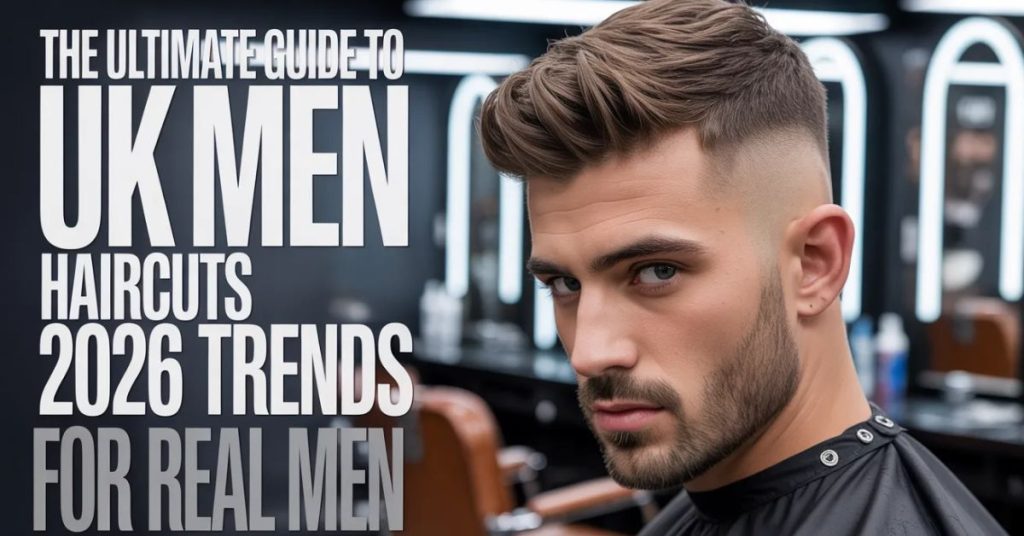
The Ultimate Guide to UK Men Haircuts 2026 Trends
Introduction
UK men haircuts have evolved into a refined blend of tradition and modern precision. Across barbershops from London to regional towns, men now expect more than just a quick trim. They want technical accuracy, personalisation, and styles that survive British weather. Today’s British barbering trends reflect culture, climate, and craftsmanship.
In the UK, barbers treat hair as tailoring for the head. Just as Savile Row tailors shape fabric around the body, British barbers sculpt texture around bone structure. Whether you prefer a textured crop, a sharp skin fade, or a modern mullet, your haircut must suit your lifestyle, hair density, and even regional humidity.
This comprehensive guide explores everything from short back and sides variations to scalp health, fade anatomy, product performance in wind and rain, and the economics behind maintaining your style. If you want clarity on how to ask a UK barber for a skin fade or understand the difference between a barber and a stylist in the UK, you’ll find your answers here.
The Evolution of British Barbering Trends
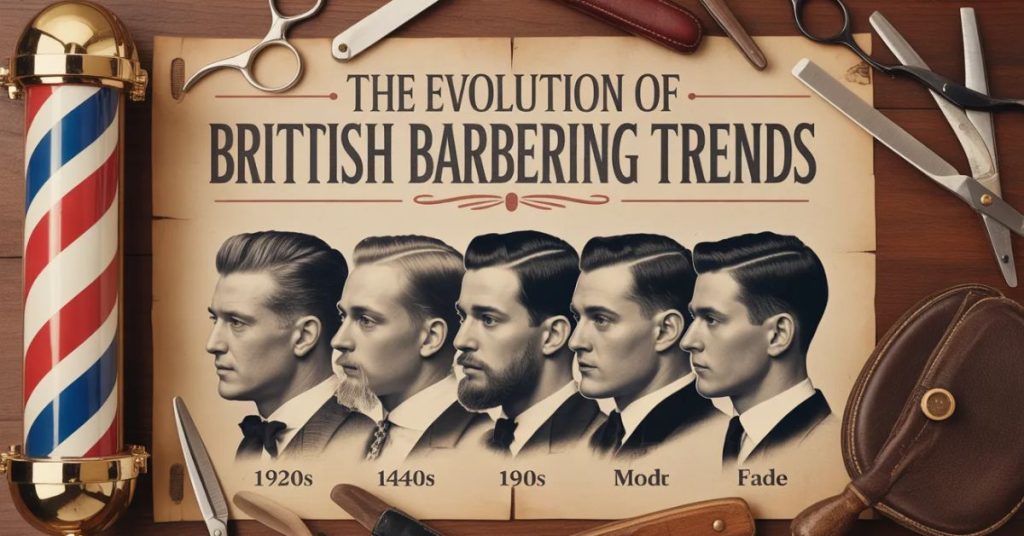
From Traditional Short Back and Sides to Modern Texture
The classic short back and sides remains the foundation of British men’s grooming. However, modern interpretations introduce:
- Skin fades
- Low fade vs. taper fade distinctions
- Textured crops
- Disconnected fringes
- Structured quiffs and pompadours
British barbering trends now emphasise movement and natural finish rather than rigid shapes.
Influence of Urban Culture in London and Manchester
Major cities like London and Manchester have shaped regional haircut identities. London street styles favour sharp fades and heavy texture. Manchester leans slightly softer with blended tapers and fuller crowns.
Barbers adapt cuts to reflect:
- Music culture
- Street fashion
- Corporate grooming standards
- Climate conditions
Popular Hairstyles for Men UK
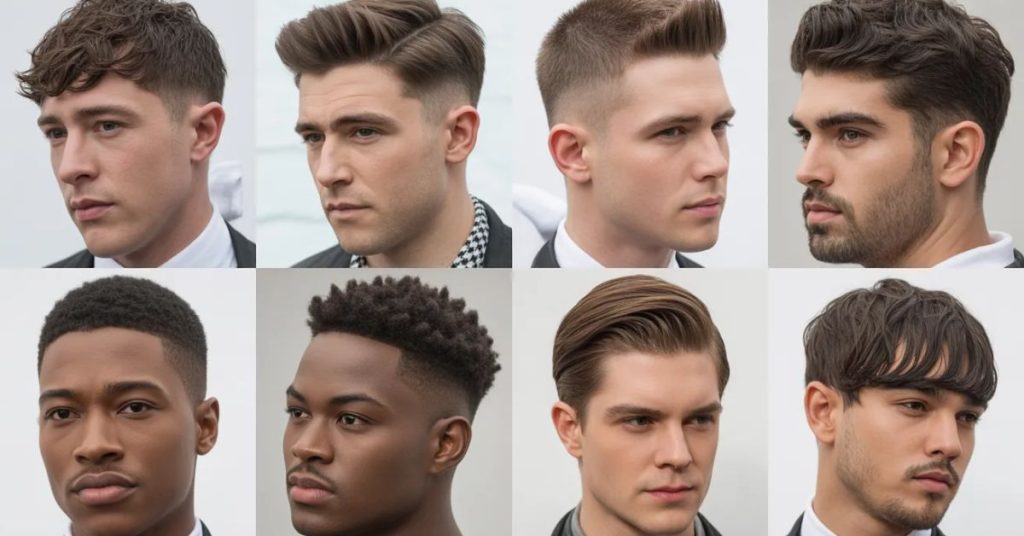
1. Textured Crop (The London Crop)
The textured crop dominates UK men haircuts due to its versatility. It works well with British hair texture types, especially thicker or slightly wavy hair.
Best for: Oval, square, and heart face shapes
Maintenance: Medium (trim every 3–4 weeks)
2. Skin Fade
A skin fade blends hair down to bare skin. UK barbers refine the transition to suit head shape.
Ideal for: Clean professional appearance
Pro tip: Always specify low, mid, or high placement.
3. Modern Mullet UK Trend
The modern mullet UK trend has returned with controlled sides and textured backs.
Best for: Creative industries
Growth-out factor: High tolerance
4. Pompadour & Quiff
Structured yet modern, these styles require blow-drying technique and premium styling products UK men can rely on in damp climates.
Understanding British Hair Texture Types
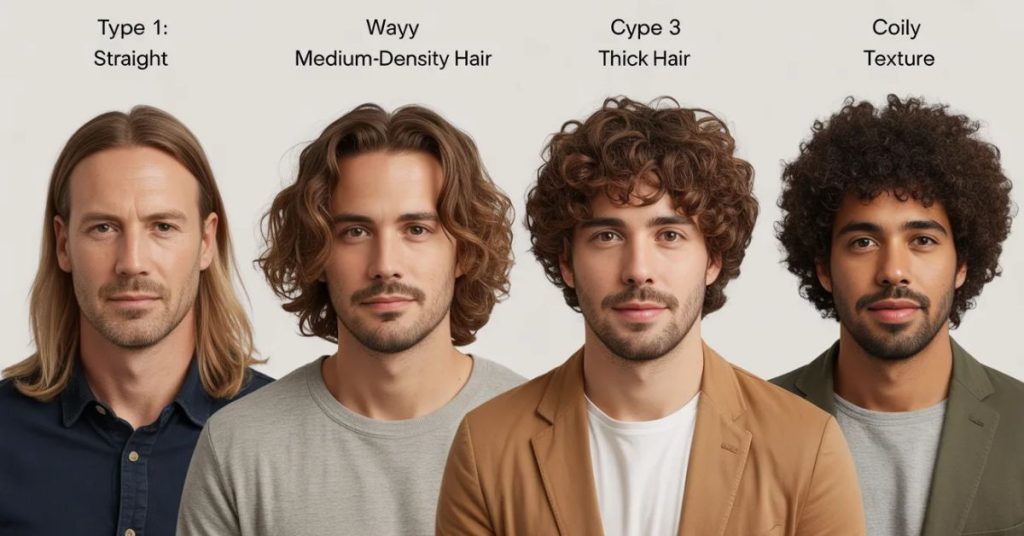
British hair varies widely due to multicultural demographics. You must assess:
| Hair Type | Density | Common Issue | Recommended Style |
| Fine & Straight | Low | Flatness | Textured crop |
| Thick & Wavy | High | Bulk control | Taper fade |
| Curly | Medium | Frizz in humidity | Low fade |
| Coarse | High | Dryness | Pompadour |
Barbers must evaluate scalp health, density, and growth patterns before cutting.
The Anatomy of a UK Fade: A Comparative Case Study
Low Fade vs. Taper Fade
| Feature | Low Fade | Taper Fade |
| Start Point | Just above ears | Natural neckline |
| Contrast | High | Subtle |
| Maintenance | 2–3 weeks | 3–4 weeks |
| Professional Suitability | Very high | Extremely high |
The London Crop vs. The French Crop
| Feature | London Crop | French Crop |
| Fringe | Textured & broken | Blunt |
| Weight Distribution | Crown-heavy | Front-heavy |
| Finish | Matte | Natural |
UK barbers adjust fade placement depending on head shape:
- Oval: Balanced fade height
- Square: Softer temple transitions
- Heart: Lower fade to preserve width
How to Ask a UK Barber for a Skin Fade
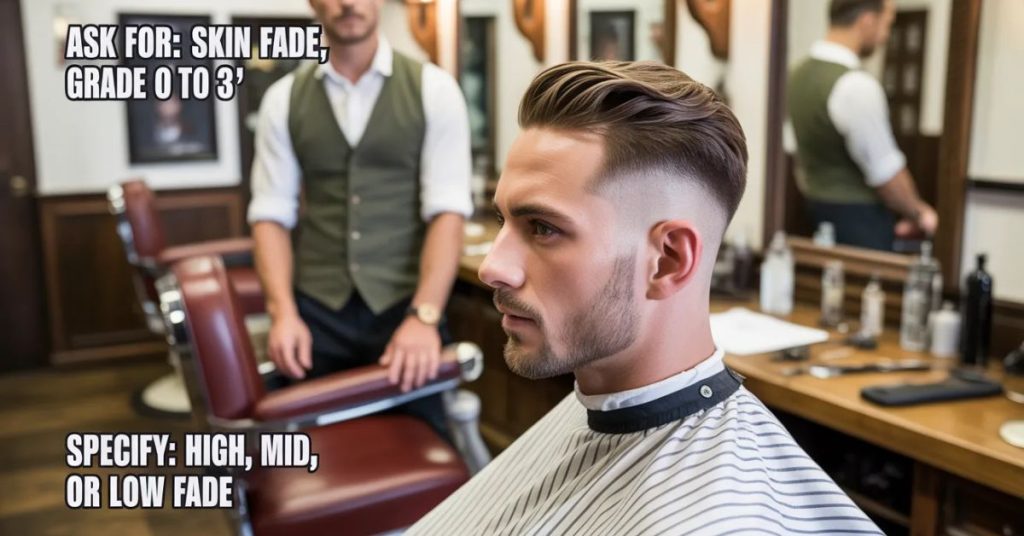
Communication prevents disappointment. Use precise terminology:
- Specify fade height (low, mid, high).
- Clarify guard length on top.
- Mention texture preference (natural vs structured).
- State neckline preference (natural or squared).
Using correct barbering language improves results and builds trust.
The British Weatherproof Styling Methodology
The Damp-Point Theory
UK humidity varies dramatically. Hair absorbs moisture, causing collapse or frizz.
The Damp-Point Theory determines how much moisture a product should retain based on regional humidity.
| Region | Avg Humidity | Ideal Product Type |
| London | 70–75% | Matte clay |
| Manchester | 75–80% | Strong-hold pomade |
| Coastal Areas | 80%+ | Styling powder + hairspray |
Hold Strength vs Wind Speed Analysis
| Product Type | Hold Strength | Wind Resistance | Finish |
| Matte Clay | Strong | High | Natural |
| High-Shine Pomade | Medium | Moderate | Glossy |
| Styling Powder | Light | Low | Ultra-matte |
This methodology ensures your UK men haircuts stay intact even in unpredictable weather.
Low Maintenance Haircuts for British Weather
Choose cuts that survive rain and wind:
- Buzz cut
- Textured crop
- Low taper fade
- Short quiff
Avoid high-structure pompadours if you commute outdoors daily.
Best Haircuts for Receding Hairlines UK
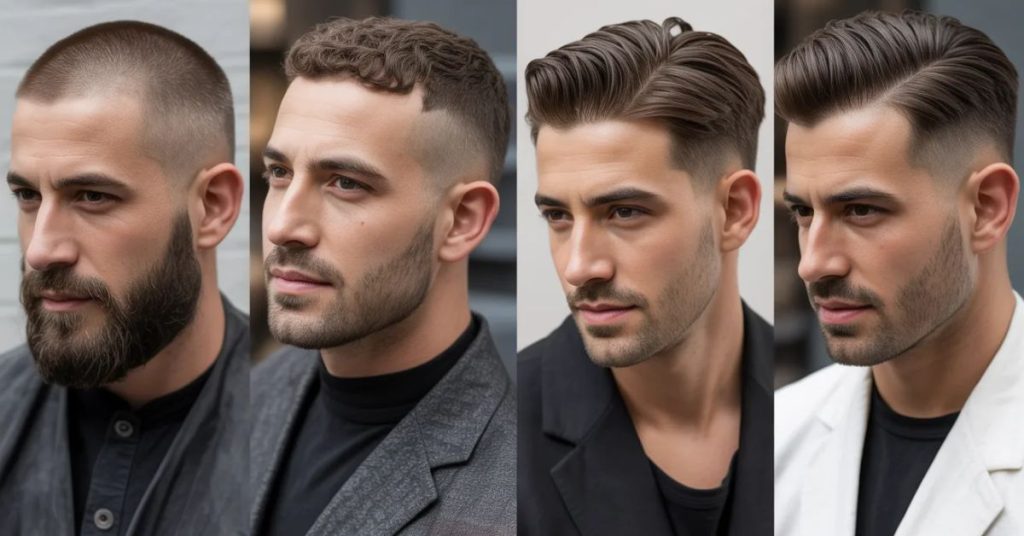
Strategic cutting can rebalance proportions.
Recommended Styles
- Short textured crop with forward fringe
- Low fade with messy top
- Classic crew cut
Avoid heavy slick-backs that expose temples.
The Economics of the Chair: Cost-per-Wear Analysis
The Maintenance Matrix
| Style | Cost | Frequency | Weekly Cost |
| Buzz Cut | £20 | 2 weeks | £10 |
| Skin Fade | £30 | 3 weeks | £10 |
| Scissor Cut | £45 | 8 weeks | £5.60 |
| Modern Mullet | £40 | 6 weeks | £6.67 |
A higher initial cost can provide greater long-term value.
Growth-Out Index (4 Weeks Later)
| Style | Appearance After 4 Weeks |
| Buzz Cut | Noticeably grown |
| Skin Fade | Requires reshaping |
| Textured Crop | Still structured |
| Scissor Cut | Natural & balanced |
Difference Between a Barber and a Stylist UK
| Barber | Stylist |
| Specialises in shorter men’s cuts | Works with all hair lengths |
| Uses clippers frequently | Focuses on scissor techniques |
| Traditional grooming services | Colour & chemical treatments |
In the UK, many barbers hold NVQ qualifications in barbering, ensuring regulated standards.
Best London Barbershops: What Sets Them Apart
Top-tier UK barbers emphasize:
- Consultation time
- Scalp analysis
- Precision fading
- Aftercare advice
Many professionals showcase expertise at events like Salon International and contribute insights to Modern Barber Magazine, strengthening industry authority.
Scalp Health and Hair Density
Healthy hair begins with scalp care.
Key Practices
- Regular cleansing
- Avoid overuse of heavy pomades
- Massage scalp weekly
- Monitor thinning patterns
Hair density influences style selection. High-density hair allows texture removal. Low density benefits from layered structure.
Men’s Hair Products UK: Choosing Wisely
Select products based on:
- Finish preference
- Hold strength
- Climate exposure
- Hair thickness
Always test small quantities first. Over-application flattens texture.
Interactive and Visual Enhancements
The Face Shape Finder
A face shape quiz improves personalisation. It analyses:
- Jaw width
- Forehead height
- Chin shape
The 60-Second Quiff Tutorial
A short instructional video demonstrates:
- Blow-dryer direction
- Sea salt spray application
- Controlled brush technique
Product Texture Sliders
Visual comparison tools help clients understand finish differences before purchase.
Expert Author Bio
Hamza
Master Barber & Creative Director at Whitaker Grooming Co.
With over 15 years behind the chair in Manchester, Hamza is a State Registered Barber (SRB) and a leading voice in British men’s grooming. Having trained at the London School of Barbering, he has refined the “British Signature”, a balance of classic tailoring and modern texture. Hamza regularly speaks on panels at Salon International and has been featured in Modern Barber Magazine. When not cutting, he delivers regional workshops on advanced fade techniques and scalp ergonomics.
Conclusion
UK men haircuts combine heritage, technique, and environmental awareness. From understanding fade placement to selecting weather-resistant styling products, British grooming requires thoughtful precision. When you factor in cost-per-wear, scalp health, and hair density, you elevate your grooming decisions beyond trends.
Choose styles that match your bone structure, daily routine, and local climate. Consult a qualified barber who understands British hair texture types and modern barbering trends. When you approach your haircut strategically, you don’t just improve appearance, you invest in long-term confidence.
FAQs
1. How often should I get a fade in the UK?
Most fades require refreshing every 2–3 weeks to maintain sharpness.
2. What haircut lasts longest in British weather?
A scissor cut with natural taper generally lasts longest.
3. Are skin fades professional in UK offices?
Yes, if executed cleanly and proportionally.
4. What is the modern mullet UK trend?
It blends faded sides with textured length at the back.
5. How do I maintain scalp health?
Use mild shampoo, avoid heavy buildup, and massage regularly.