African American Men Haircuts & Grooming Trends 2026
Introduction
In 2026, African American men’s grooming is evolving faster than ever. From trendy haircuts to advanced beard care, understanding your hair’s unique texture and scalp needs is key to looking sharp and maintaining healthy hair. Whether you’re rocking a taper fade, protective style, or 360 waves, this guide will help you master modern grooming techniques while caring for your natural hair.
We’ll cover everything from hair structure and scalp science to styling methodologies, product recommendations, and interactive tools that make choosing the perfect haircut effortless.
Understanding Afro-Textured Hair
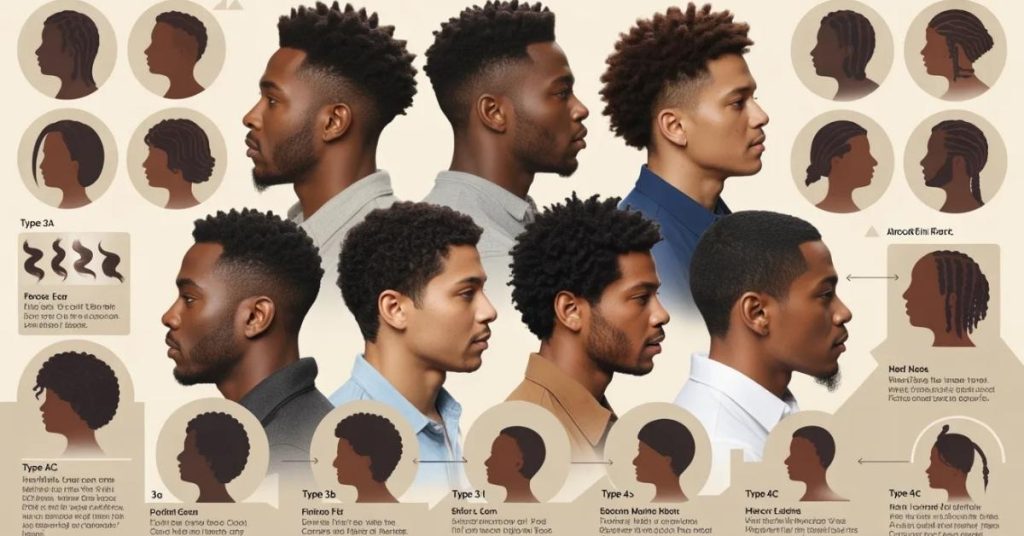
Afro-textured hair requires special attention because of its unique curl pattern, density, and fragility. Knowing your hair’s structure helps you choose the right style, products, and grooming routines.
Hair Structure & Growth Patterns
Afro-textured hair has a curly coil pattern that can range from 4A (looser curls) to 4C (tightest coils). This curl pattern affects moisture retention, breakage risk, and styling options.
| Hair Type | Curl Pattern | Density | Styling Tips |
| 4A | Loose coils | Medium | Wash-and-go styles, short fades |
| 4B | Z-shaped coils | High | Twist-outs, tapered cuts |
| 4C | Tight coils | Very high | Protective styles, LOC method, short fades |
The scalp produces sebum, which naturally moisturizes hair. However, tight coils make it harder for sebum to travel down the hair shaft, leading to dryness. Proper hydration and oil application are essential.
Common Scalp & Hair Challenges
Black men often face unique challenges, including:
- Pseudofolliculitis Barbae (Razor Bumps): Caused by curly hairs curling back into the skin.
- Seborrheic Dermatitis: Scaly patches that can affect scalp health.
- Breakage & Dryness: Tight coils are more prone to snapping without proper moisture.
Understanding these challenges allows you to prevent issues before they impact your style.
Popular Haircuts for Black Men in 2026
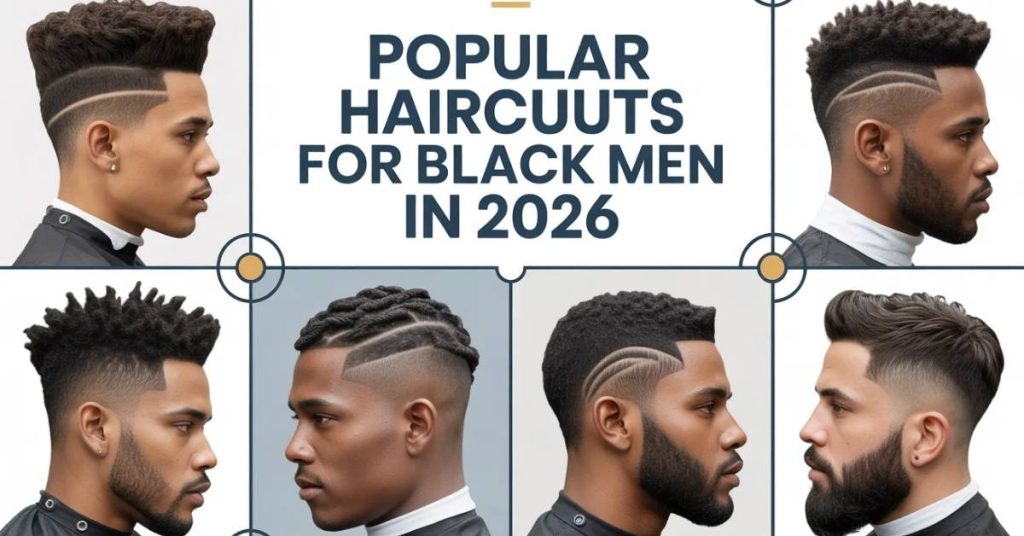
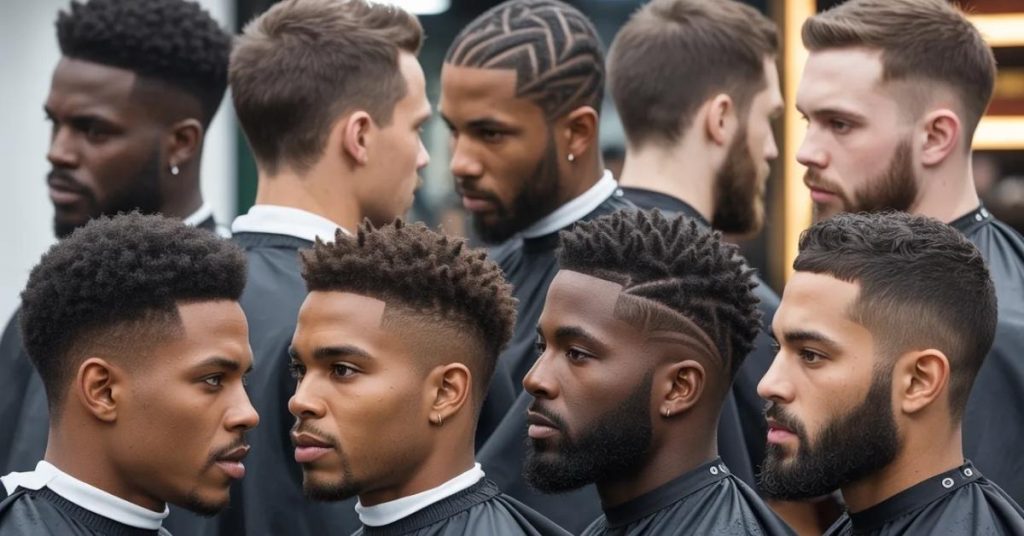
Barbers are blending tradition with modern trends to create versatile, low-maintenance, and stylish looks for African American men.
Taper Fade vs. Drop Fade
Taper fades gradually shorten the hair along the sides and back, creating a neat appearance. Drop fades curve downward behind the ears, giving a more dramatic, contemporary look.
| Fade Type | Maintenance Level | Face Shape Suitability | Best Hair Types |
| Taper Fade | Medium | Oval, Square, Round | 4A, 4B |
| Drop Fade | Medium-High | Round, Diamond, Oval | 4B, 4C |
The Coil-to-Cut Ratio (CCR) Method helps men pick a fade based on curl density and length for optimal results.
Modern Pompadour for Afro-Textured Hair
The modern pompadour suits medium-length curls and requires regular hydration. Use a lightweight curl cream to maintain definition and avoid frizz. This style works well for 4A and 4B hair textures.
Buzz Cut, Line-up & Shape-up Techniques
A buzz cut is easy to maintain and versatile. Adding a line-up (shape-up) sharpens edges around the forehead and temples. Proper technique prevents ingrown hairs and maintains a clean, fresh look.
Protective Styles for Short Hair
Protective styles reduce breakage and promote hair health. Popular options include:
- Cornrows: Versatile and low-maintenance.
- Twists: Enhance curl definition and retain moisture.
- Short Locs: Offer a stylish, textured look while protecting natural hair.
Natural Hair Care for Black Men
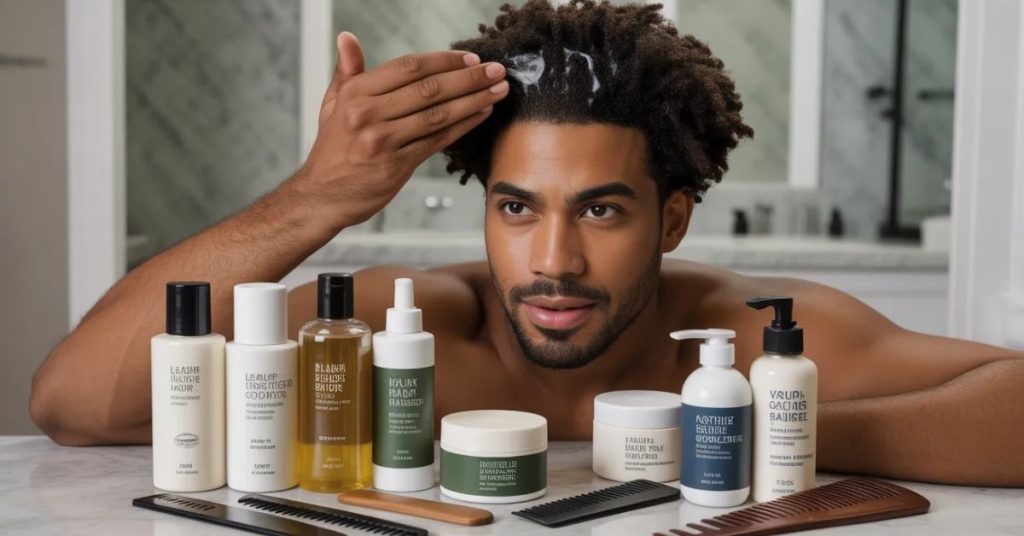
Maintaining healthy hair is essential for stylish cuts and confident grooming.
Best Hair Oils for 4C Hair Men
4C hair thrives on moisture and natural oils.
| Oil | Benefits | How to Use |
| Jojoba | Mimics natural sebum | Apply after washing and detangling |
| Castor | Thickens and strengthens | Massage into scalp 2-3 times/week |
| Argan | Adds shine and reduces frizz | Use as a leave-in after styling |
LOC Method Masterclass
The LOC Method (Leave-in, Oil, Cream) maximizes hydration for natural hair:
- Leave-in Conditioner: Moisturizes and softens curls.
- Oil: Seals in moisture to prevent dryness.
- Cream: Defines curl pattern and reduces frizz.
An instructional video can demonstrate this routine step by step.
Moisture Retention & Scalp Health
A 12-week case study tracked moisture retention in men transitioning from an afro to 360 waves. Participants who followed a consistent LOC routine and used natural oils saw reduced breakage, healthier scalp, and improved wave definition.
360 Waves Maintenance
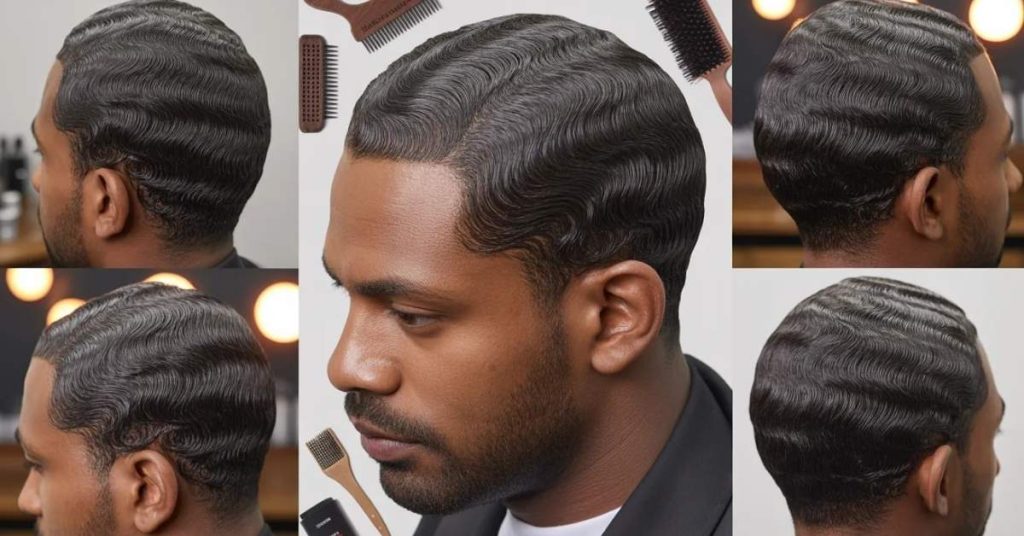
360 waves are a classic, stylish look that requires mechanical tension and proper hydration.
Step-by-Step Wave Training
- Wash and condition hair.
- Apply wave cream or pomade.
- Brush in circular motions 2-3 times per day.
- Wear a durag overnight to maintain compression.
Common Mistakes & How to Fix Them
- Over-brushing: Leads to micro-tears.
- Skipping moisturizing: Waves lose definition.
- Using harsh products: Sulfate-based shampoos dry out 4C hair.
Beard Grooming for Coily Hair
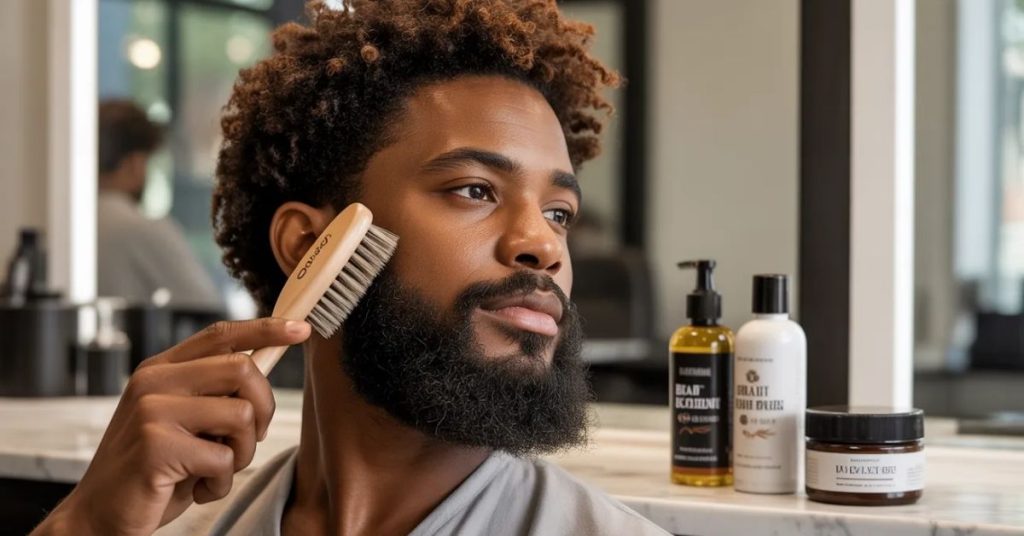
Black men often struggle with patchy beards and ingrown hairs due to curl pattern and follicle shape.
How to Fix a Patchy Beard for Black Men
- Stimulate follicles using gentle exfoliation.
- Apply beard oils rich in vitamin E and argan oil.
- Trim uneven areas carefully to encourage uniform growth.
Beard Oils & Balms
| Product | Benefits | Frequency |
| Argan Oil | Softens coarse hair | Daily |
| Shea Butter Balm | Adds moisture & reduces itching | 2-3 times/week |
| Tea Tree Oil Mix | Prevents ingrown hairs | After shaving |
Hair & Grooming Tools
Using the right tools enhances results and prevents damage.
Choosing the Right Clippers for 4C Hair
- High-torque motors prevent snagging.
- Ceramic or stainless-steel blades ensure precision.
- Regular cleaning extends lifespan.
Line-up (Shape-up) Techniques
A proper line-up requires a steady hand and sharp trimmer or razor. Applying aftershave or antiseptic prevents irritation and razor bumps.
Protecting Your Hair & Rights
Hair isn’t just style; it’s identity. The CROWN Act prevents discrimination based on natural hairstyles in schools and workplaces.
Barber Licensure & Industry Standards
Choosing licensed barbers ensures safe practices and expertise in textured hair. Look for certifications and experience in 4C hair and advanced fade techniques.
Expert Methodologies for Haircuts
Texture-First Selection Matrix
The Coil-to-Cut Ratio (CCR) evaluates hair curl tightness and density to recommend styles that suit both texture and face shape.
Scalp Micro-Environment Audit
Monitoring moisture evaporation helps determine the best products:
| Product Type | Evaporation Rate | Effect on Scalp |
| Petroleum-based greases | Low | Can clog follicles |
| Natural humectants | Moderate | Retain moisture, reduce breakage |
Interactive Tools & Resources
- Face Shape Style Finder Tool: Choose haircut based on face shape and curl type.
- Maintenance Comparison Table: Quickly compare upkeep for buzz cut, waves, or protective styles.
Conclusion
African American men haircuts and grooming trends in 2026 combine style, science, and cultural pride. Understanding hair texture, scalp health, and proper styling techniques empowers men to look their best while maintaining healthy hair. From fade variations and 360 waves to natural hair care routines and beard grooming, this guide equips you with everything you need to stay sharp and confident.
Healthy hair is more than appearance; it’s a reflection of self-care, heritage, and modern trends. Follow the expert methodologies, invest in quality products, and choose licensed barbers to achieve the ultimate grooming results.
FAQ’s
Q1: How to prevent ingrown hairs on Black skin?
A1: Exfoliate regularly, use a sharp razor, moisturize, and avoid shaving against the grain.
Q2: What is the best hair oil for 4C hair men?
A2: Jojoba, castor, and argan oils are highly recommended for hydration and growth.
Q3: How to fix a patchy beard for Black men?
A3: Use follicle stimulation techniques, apply beard oils, and trim carefully.
Q4: What is the difference between a taper fade and drop fade?
A4: Taper fades gradually shorten hair; drop fades curve downward for a modern look.
Q5: How often should 360 waves be brushed?
A5: Brush 2-3 times daily with proper hydration and durag compression.