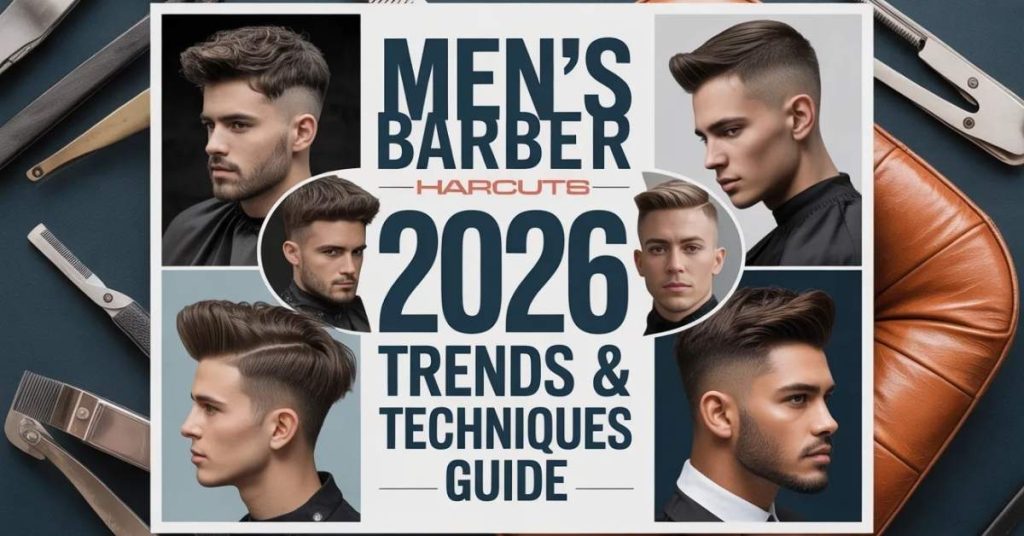
Men’s Barber Haircuts: 2026 Trends & Techniques Guide
Introduction
Men’s barber haircuts have evolved far beyond simple trims. Today, a barbershop haircut is a calculated blend of geometry, grooming science, product knowledge, and personalized design. In 2026, trending hairstyles for men focus on structure, texture, and longevity. Modern barbers do not just cut hair. They engineer shape, balance proportions, and enhance facial features.
If you want to dominate your look, you must understand more than just “low fade” or “short back and sides.” You must understand face shape, follicle density, fade gradients, and product selection. This guide walks you through the entire grooming universe surrounding men’s barber haircuts.
Whether you want a professional men’s grooming style for the office, a textured crop style for everyday wear, or a modern mullet variation for 2026, this guide gives you real-world barbershop knowledge.
Understanding the Geometry: Why Face Shape Matters
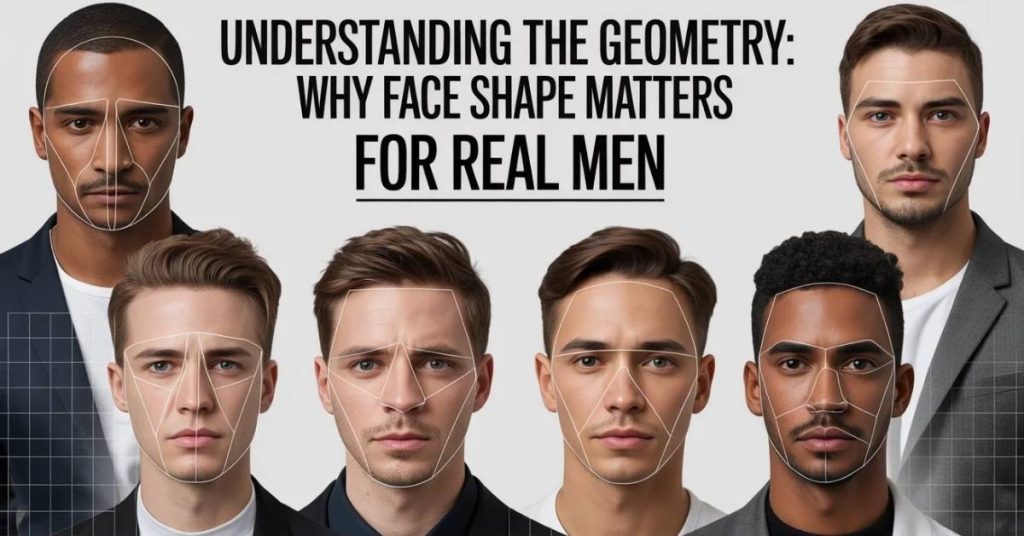
Every great haircut starts with geometry. Your barber studies angles, bone structure, and hair density before picking up clippers.
The 5-Point Cranial Shape Assessment
Professional barbers use five structural checkpoints:
- Forehead width
- Temple recession pattern
- Parietal ridge prominence
- Occipital bone projection
- Jawline structure
The occipital bone, located at the lower back of your skull, determines how well fades blend. A strong occipital curve needs careful tapering. A flat back head needs volume balancing.
Barbers do not follow trends blindly. They balance the head shape.
Example: Balancing Head Shape
| Cranial Feature | Problem | Barber Solution |
| Flat Occipital Bone | Head looks boxy | Add crown texture + softer taper |
| Strong Parietal Ridge | Shelf effect | Blend mid fade slightly lower |
| Wide Jawline | Bottom-heavy look | Add volume on top |
| Narrow Forehead | Top looks small | Textured fringe |
When you understand geometry, you stop chasing trends and start choosing smart styles.
Haircuts for Face Shapes
Different face shapes require different structures.
Oval Face
Most versatile. Works with classic gentlemen’s cuts and modern textured crop styles.
Round Face
Add height. Choose mid or high fades. Avoid bulky sides.
Square Face
Sharp jawlines pair well with executive contour or classic taper.
Oblong Face
Avoid too much height. Opt for balanced scissor cuts.
Diamond Face
Keep width near temples. Avoid ultra-tight fades.
The Encyclopedia of Fades (Low, Mid, High, and Burst)
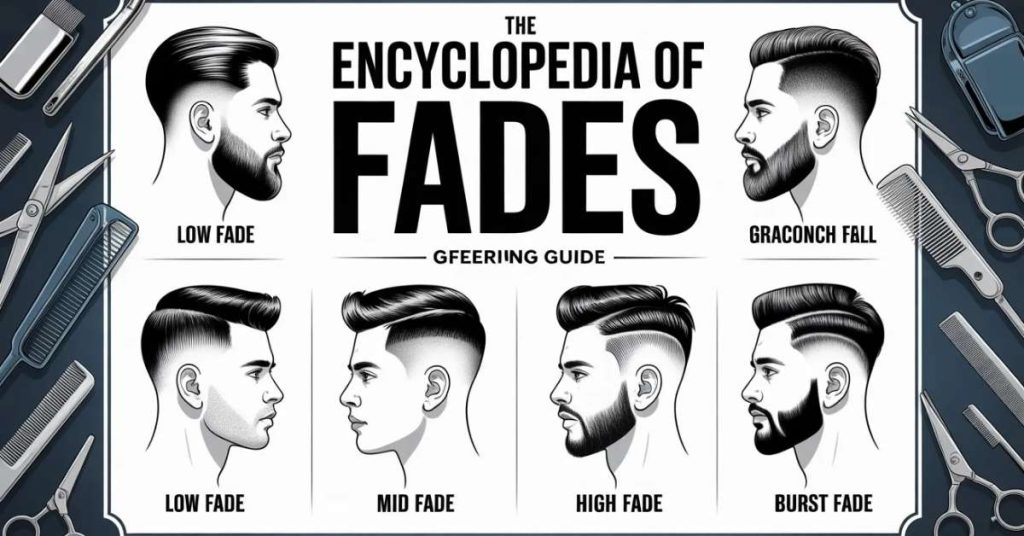
Fades remain the backbone of men’s barber haircuts in 2026.
The Fade Gradient Explained
A fade is not just short-to-shorter. It is a gradient transition zone.
- Low Fade: Begins near ear.
- Mid Fade: Starts at temple.
- High Fade: Begins above parietal ridge.
- Burst Fade: Circular blend around ear.
Taper vs. Fade Guide
Many clients confuse taper and fade.
| Feature | Taper | Fade |
| Transition Area | Small (sideburn + neckline) | Full sides |
| Skin Exposure | Minimal | Can be skin-tight |
| Maintenance | Low | High |
| Professional Setting | Very suitable | Depends on height |
If you want professional men’s grooming, choose a taper.
If you want sharp trending hairstyles for men 2026, choose a fade.
Maintenance Schedule for Mid-Skin Fades
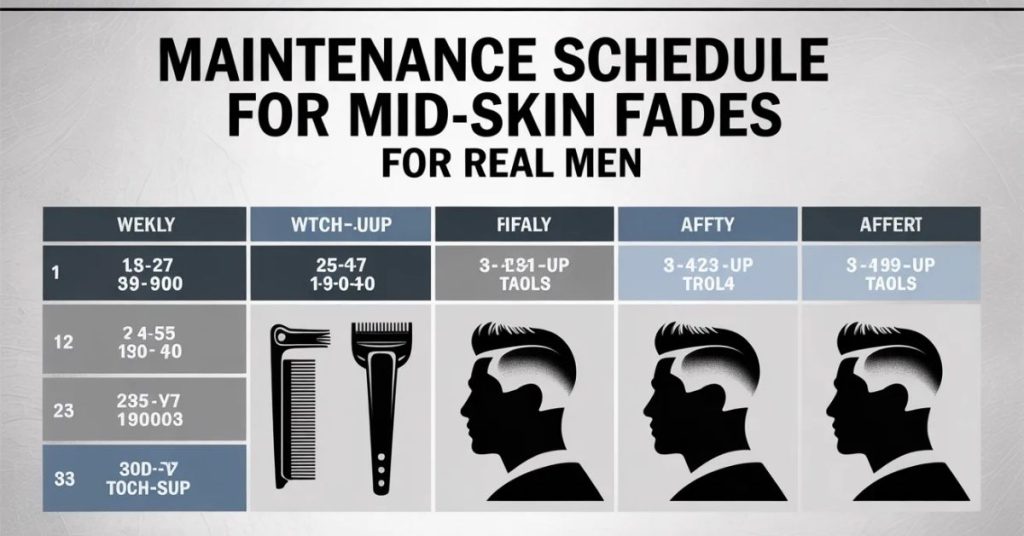
Fades decay quickly. Here’s a 4-week breakdown.
Case Study: The 4-Week Fade Decay Lab
| Week | Skin Fade Look | Taper Look | Scissor Cut Look |
| Week 1 | Ultra sharp | Clean | Natural |
| Week 2 | Slight blur | Still neat | Soft growth |
| Week 3 | Noticeable bulk | Mild edge growth | Fuller |
| Week 4 | Overgrown | Still acceptable | Styled look |
Cost-Per-Day Analysis
| Cut Type | Avg Cost | Lasts | Cost Per Day |
| Skin Fade | $35 | 14 days | $2.50 |
| Mid Fade | $35 | 21 days | $1.66 |
| Taper | $30 | 28 days | $1.07 |
| Scissor Cut | $40 | 35 days | $1.14 |
If you want low maintenance haircuts for thinning hair, avoid skin fades. Choose textured scissor cuts instead.
Classic vs. Modern: From the Executive Contour to the Textured Crop
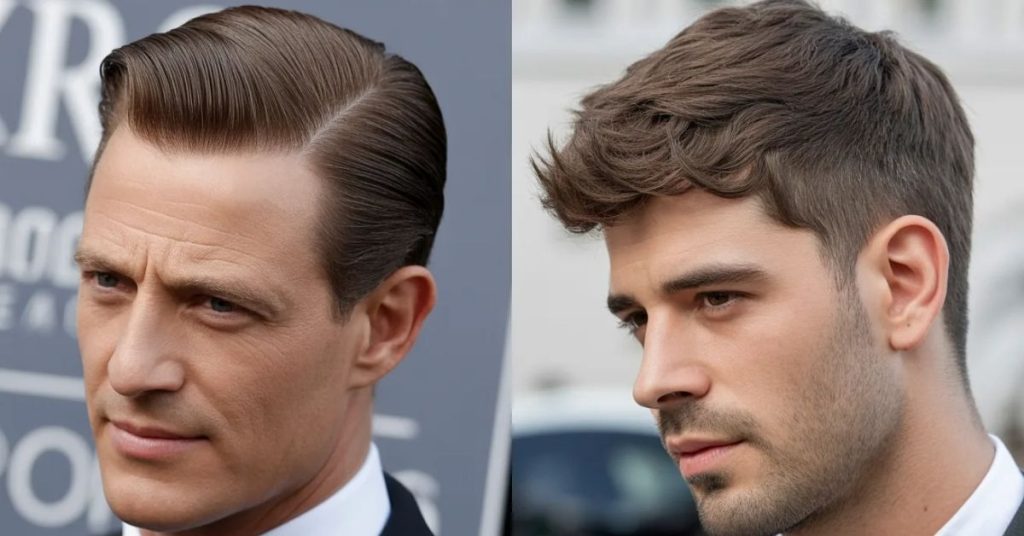
Classic Gentlemen’s Cuts
Classic styles never fade from fashion.
Executive Contour
Clean side part. Tapered neckline. Professional polish.
Ivy League
Short but styled. Works well for office settings.
Crew Cut
Timeless. Easy. Minimal styling.
Modern Textured Crop Styles
Textured crop styles dominate trending hairstyles for men 2026.
- Messy fringe
- Skin fade base
- Matte finish products
Modern Mullet Variations for 2026
The modern mullet returns with cleaner fades and structured top layers.
Key features:
- Burst fade sides
- Layered back
- Matte clay styling
The Barber Consultation: How to Speak ‘Barber’ and Never Get a Bad Cut Again
Many bad cuts happen because clients lack barber language.
The Barber Language Translation Matrix
Guard Numbers Explained
| Guard | Length | Fine Hair | Medium Hair | Coarse Hair |
| #1 | 1/8 inch | Very short scalp show | Tight | Dense short |
| #2 | 1/4 inch | Light coverage | Clean short | Compact |
| #3 | 3/8 inch | Fuller | Balanced | Thick look |
| #4 | 1/2 inch | Natural short | Classic | Heavy top |
Texture vs. Thinning
- Texture: Removes weight but keeps density.
- Thinning: Reduces bulk by removing strands.
If you have receding hairlines, ask for forward texture, not thinning.
How to Describe a Fade to Your Barber
Say this clearly:
- “I want a mid fade that begins at the temple.”
- “Keep weight near parietal ridge.”
- “Blend into a textured top.”
- “No hard line.”
Clear communication prevents regret.
Maintenance & Product Science: Keeping the ‘Fresh Out of the Chair’ Look
Haircuts fail without product knowledge.
Selecting the Right Product for Your Hair Type
Pomade vs. Clay
| Product | Finish | Hold | Best For |
| Pomade | Shine | Medium | Classic side parts |
| Clay | Matte | Strong | Textured crops |
| Cream | Natural | Light | Thinning hair |
| Gel | Wet | Strong | Structured styles |
Follicle Density Matters
Fine hair needs lightweight cream.
Coarse hair handles clay or pomade.
Professional Men’s Grooming Routine
- Wash 2–3 times weekly.
- Blow dry for shape.
- Apply product to damp hair.
- Schedule trims based on fade height.
Multi-Media Visual Learning Plan
While this guide explains technique, visualize geometry using:
- Face Shape Detector Tool
- Fade Gradient Diagrams
- Matte vs. Shine Comparison Gallery
- 30-Second Barber Talk Clips
These tools help you understand structure visually.
Barber Haircuts for Receding Hairlines
Choose forward texture.
Avoid slick backs.
Opt for low taper.
Add soft fringe.
Best low-maintenance haircuts for thinning hair include:
- Textured crop
- Short Ivy League
- Scissor taper
Trending Hairstyles for Men 2026
- Textured crop with burst fade
- Modern mullet variation
- Low taper with natural curls
- Classic executive contour revival
- Natural scissor-over-comb layered cut
Barbers now favor scissor-over-comb technique for softer transitions instead of heavy clipper lines.
Conclusion
Men’s barber haircuts in 2026 demand knowledge, not guesswork. When you understand fade gradients, cranial geometry, follicle density, and product science, you stop being a passive client. You become an informed decision-maker.
Barbershop haircut styles are no longer just trends. They are engineered designs shaped by bone structure, maintenance habits, and grooming goals.
FAQs
1. How often should I get a fade haircut?
Skin fades require maintenance every 2 weeks. Mid fades last 3 weeks. Tapers last 4 weeks.
2. What is the best haircut for thinning hair?
Textured crops and scissor cuts work best because they add movement without exposing the scalp.
3. How do I explain what I want to my barber?
Use guard numbers, fade height, and texture preferences. Bring reference photos.
4. Is taper better than fade for office jobs?
Yes. Tapers look more conservative and require less maintenance.
5. What product should I use daily?
Use clay for matte texture. Use pomade for shine. Match product to hair density.

Mughal Hamza is an experienced SEO expert specializing in keyword research, on-page optimization, and content strategy. Passionate about driving organic traffic and improving search rankings for businesses.