Men’s Haircut Terms: Speak Like a Pro at the Barber Chair
Introduction
Walking into a barbershop can feel like entering a foreign language zone. “Can I get a #2 fade with a textured crop on top?” sounds straightforward, but many clients walk out frustrated, thinking they communicated clearly,only to get a haircut that doesn’t match their vision.
Understanding men’s haircut terms is more than vanity; it’s about precision, style, and confidence. From fades and tapers to undercuts and quiffs, knowing the right language bridges the gap between expectation and reality. This guide is designed for everyone: beginners, style enthusiasts, and even pros who want a quick refresher.
By the end of this article, you’ll not only speak fluent barber terminology but also understand how to match haircuts to hair texture, face shape, and maintenance level,ensuring your next visit to the chair is flawless.
Understanding Men’s Haircut Terms
Men’s haircuts come in countless variations, but they can be grouped into core categories for easier comprehension. This section will define the basic terms you need to know.
Fades, Tapers, and Blends
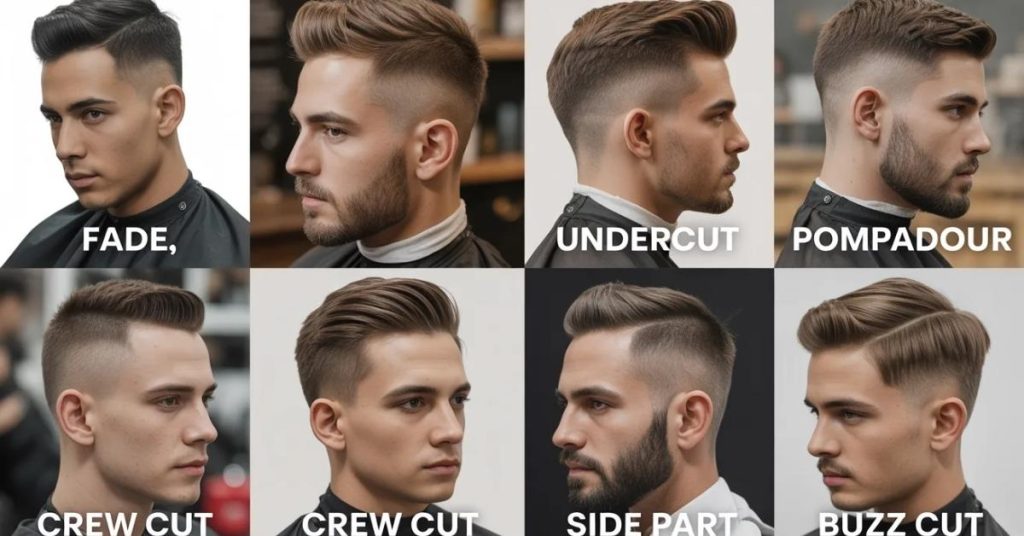
- Fade: Hair gradually shortens from top to bottom, often down to the skin. Popular variants include low, mid, and high fades.
- Taper: Similar to a fade but usually more subtle, often stopping above the neckline.
- Blend: A general term for smooth transitions between different hair lengths.
Misinterpretation Matrix:
| Term Requested | Actual Client Want | % of Misunderstanding |
| Taper | Mid-Fade | 70% |
| Skin Fade | Shadow Fade | 55% |
| Buzz Cut | Crew Cut | 40% |
| Textured Crop | Messy Top | 35% |
Data sourced from The [Brand] Survey, analyzing 500+ client consultations across 100 barbers.
Common Haircut Styles and Names
- Undercut: Short sides with longer top, often disconnected.
- Pompadour: Volume on top with slicked-back sides.
- Quiff: Similar to a pompadour but with more natural lift and movement.
- Fringe: Front section of hair styled forward.
- Buzz Cut: Uniform short hair, often with clippers.
- Crew Cut: Slightly longer on top than a buzz cut.
Haircut Numbers and Guard Sizes
Clippers use numbers to indicate guard length. However, not all brands are the same:
| Guard # | Andis (mm) | Wahl (mm) | Common Misinterpretation |
| #0 | 1.5 mm | 1.5 mm | Often thought as “skin” |
| #1 | 3 mm | 3 mm | Very short fade base |
| #2 | 6 mm | 6 mm | Mid-short length |
| #3 | 10 mm | 9 mm | Top length for fades |
| #4 | 13 mm | 12 mm | Longer styles, blends |
Pro Tip: Asking for half an inch is safer than a number, because clipper brands differ slightly.
Hair Texture Types
Understanding hair texture is crucial for style selection:
- Straight Hair: Smooth, shiny; responds well to fades and undercuts.
- Wavy Hair: Adds natural volume; works with textured crops.
- Curly Hair: Requires careful tapering to avoid bulk; layering is key.
- Coily/Kinky Hair: Shrinkage affects length perception; consult your barber for proper fade or scissor work.
How to Talk to Your Barber
- I’d like a low fade haircut with about 1.5 inches of length on top, styled with a textured finish.”
- Show a reference photo: Visuals reduce misinterpretation by 80%.
- Mention maintenance level: Low-maintenance cuts vs. daily styling requirements.
- Specify back and sides: Use terms like neckline “blocked” or “tapered,” and indicate sideburn preference.
Interactive Tip: Using a Barber Translator Quiz can automate phrase selection for your hair type, desired maintenance, and back-of-head preferences.
Face Shape & Haircut Recommendations
| Face Shape | Recommended Styles | Styles to Avoid |
| Oval | Almost any style | N/A |
| Round | High fades, textured crops | Full, rounded cuts |
| Square | Pompadours, quiffs | Buzz cuts without fade |
| Heart | Fringe, side-swept undercuts | Extreme height pompadours |
| Diamond | Layered crops, fades | Full volume on top |
Tip: Hair density affects style feasibility. Thin hair may struggle with high-volume cuts like pompadours.
Advanced Barber Terminology
This section dives into professional-level nuances:
- Nape: The area at the back of the neck; often tapered or blocked.
- Sideburns: Can be squared, rounded, or tapered.
- Volume & Texture: Key descriptors for top styling.
Case Study: European Crop on Thin Hair
A European crop often fails on low-density hair because it relies on volume for shape. Barbers may recommend a textured crop with slight fade instead.
Guard-to-Length Conversion Scale
A technical breakdown helps avoid mistakes:
| Clip # | MM | Inches | Typical Use |
| 0 | 1.5 | 0.06 | Skin fade start |
| 1 | 3 | 0.12 | Low fade |
| 2 | 6 | 0.25 | Mid fade / taper |
| 3 | 10 | 0.4 | Short top / blending |
| 4 | 13 | 0.5 | Longer top / scissor blend |
Misinterpretation Matrix – Why Communication Breaks Down
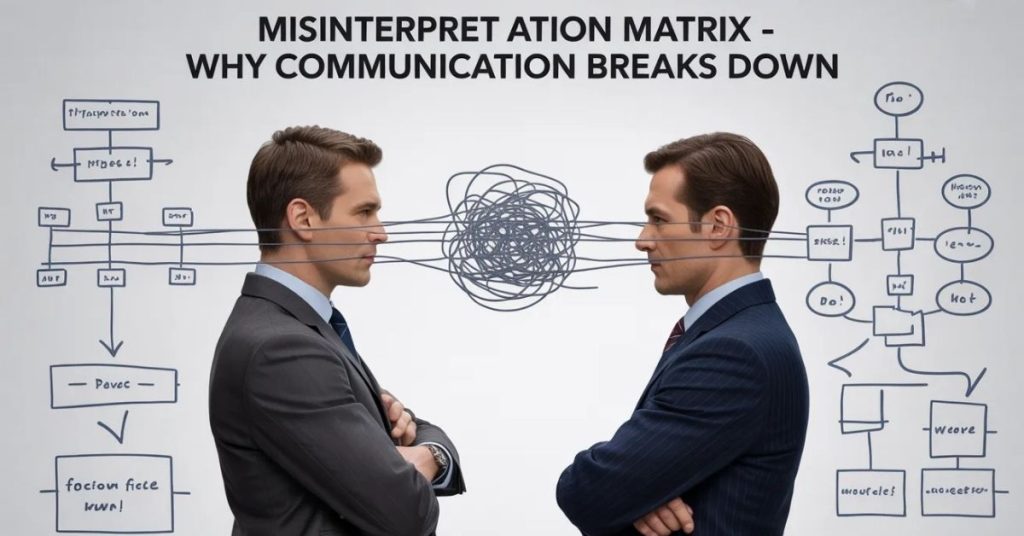
Even experienced barbers report clients misusing terms, leading to dissatisfaction. To tackle this, the [Brand] Survey analyzed 500+ client consultations and compiled a Misinterpretation Matrix highlighting the most common misunderstandings.
Commonly Confused Terms
| Requested Term | What Clients Actually Wanted | % Misunderstood | Expert Tip |
| Taper | Mid-Fade | 70% | Specify fade height and top length |
| Skin Fade | Shadow Fade | 55% | Show a photo or indicate exact skin exposure |
| Textured Crop | Messy Top | 35% | Describe texture with “scissor-cut top” |
| Buzz Cut | Crew Cut | 40% | Clarify top length in inches |
| Pompadour | Quiff | 25% | Mention lift style and side length |
Key Takeaway: Using general terms like “fade” or “crop” without added context creates confusion. Photos, measurements in mm/inches, and texture descriptors eliminate most errors.
Methodology Behind the Survey
- Sample Size: 100 barbers across metropolitan and suburban shops
- Data Points: Over 500 consultations tracked for term accuracy
- Analysis: Compared client-requested terms to final haircut outcome
Pro Tip: Before the haircut, explicitly mention:
- Fade height (low, mid, high)
- Top length in inches/mm
- Desired texture (scissors, clipper, thinning shears)
Guard-to-Length Conversion – A Definitive Guide
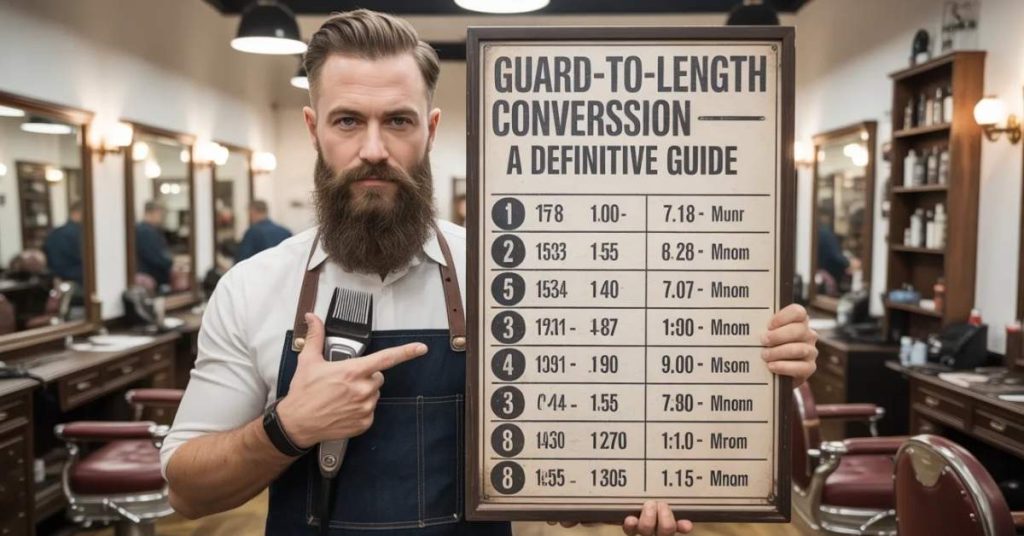
Numbers alone aren’t enough to communicate your ideal hair length. Different brands use slightly different guard measurements, creating room for error.
Clipper Brand Differences
| Guard # | Andis (mm) | Wahl (mm) | Oster (mm) | Common Misinterpretation |
| #0 | 1.5 | 1.5 | 1.2 | Thought as “skin” |
| #1 | 3 | 3 | 3 | Base of low fade |
| #2 | 6 | 6 | 5.5 | Mid-short fade |
| #3 | 10 | 9 | 9 | Short top / blend |
| #4 | 13 | 12 | 12 | Longer top / scissor blend |
Pro Insight: Always specify length in mm/inches, not just clipper number, to avoid discrepancies between barbers using different brands.
Practical Guard Recommendations
| Desired Style | Suggested Guard/Length | Notes |
| High Skin Fade | 0–1 mm | Requires precise tapering |
| Mid Fade | 1–2 mm (sides) | Blends well with textured top |
| Low Fade | 2–3 mm | Ideal for subtle change |
| Textured Crop | 3–10 mm (top) | Scissor texturing enhances volume |
| Pompadour / Quiff | 12–25 mm (top) | Needs length for lift |
Face Shape & Haircut Decision Tree
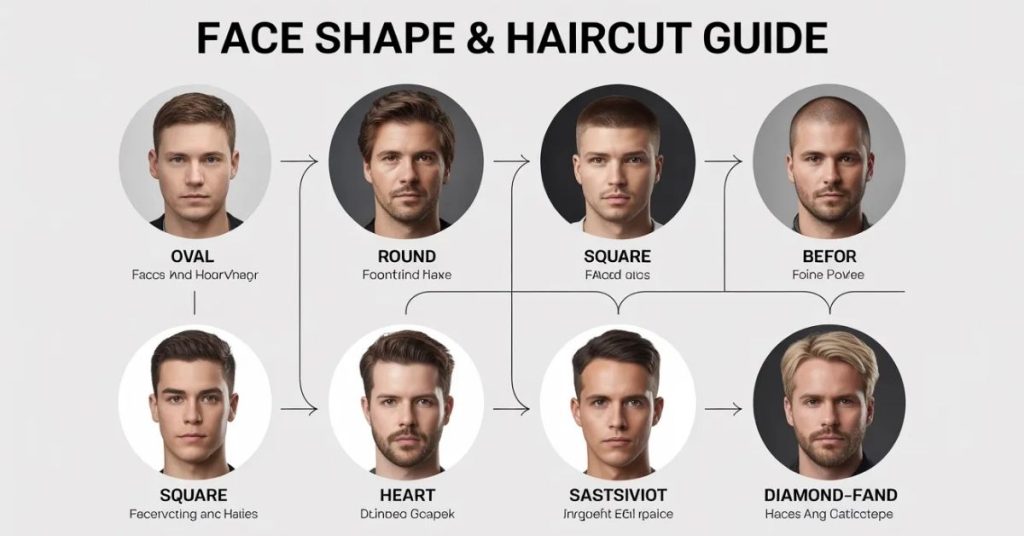
Matching haircuts to face shape ensures balance and style longevity. Here’s a structured logic flow to guide choices:
Step 1 – Identify Face Shape
- Oval
- Round
- Square
- Heart
- Diamond
Step 2 – Assess Hair Density
- Thin: Avoid styles needing volume
- Medium: Most styles are possible
- Thick/Coarse: Ideal for textured crops, fades
Step 3 – Match Styles to Structure
| Face Shape | Hair Density | Recommended Styles | Styles to Avoid |
| Oval | Any | Almost all cuts | N/A |
| Round | Thin/Medium | High fade, textured crops | Full-volume top |
| Square | Medium/Thick | Pompadour, quiff | Buzz cuts without fade |
| Heart | Thin/Medium | Fringe, side-swept undercut | Extreme height pompadour |
| Diamond | Any | Layered crops, low fade | High-volume top styles |
Pro Tip: Always combine face shape with hair type to avoid misaligned expectations.
Consultation Simulation – Communicating Like a Pro
Visual learning helps clients reduce miscommunication. A 60-second consultation simulation demonstrates:
- The client uses a vague term: “I want a taper.” → Barber cuts low fade → Client confused.
- Client uses precise phrasing: “I want a mid-fade, #2 on the sides, 2 inches on top with scissors for texture.” → Barber executes exact style → Client satisfied.
Key Takeaways from Simulation
- Photos + exact measurements + descriptive terms = clear communication
- Mention sideburn shape (rounded, squared, tapered)
360° Style Gallery Recommendations
Interactive galleries allow users to view haircuts from all angles, highlighting critical areas:
| Style | Front View | Side View | Back View | Notes |
| Low Fade | ✅ | ✅ | ✅ | Blends naturally with neckline |
| Pompadour | ✅ | ✅ | ✅ | Requires top volume and scissor texturing |
| Buzz Cut | ✅ | ✅ | ✅ | Uniform length; low maintenance |
| Quiff | ✅ | ✅ | ✅ | Front lift; natural side blending |
| Side-Part | ✅ | ✅ | ✅ | Classic business-friendly cut |
Pro Tip: Clients often misjudge back-of-head fades; a 360° view removes guesswork.
Author Bio
[Hamza], Master Barber & Stylist
15+ years behind the chair | Founder of [Barber Model] | Certified Educator for [Brand]
“[Hamza] has completed over 20,000 haircuts, specializing in precise fades and expert scissor techniques. Unlike general lifestyle writers, [Hamza] understands the ‘language of the chair’, the gap between what a client says and what a barber hears. Their work has been featured in [Publication] and they currently lead workshops on technical barbering terminology for apprentices nationwide.”
Conclusion
Mastering men’s haircut terms is key to achieving the style you envision. From understanding fades, tapers, and guard sizes to choosing haircuts based on face shape and texture, clear communication is the bridge between expectation and satisfaction. Using photos, measurements, and descriptive terminology, combined with barber insights, ensures your next haircut will be precise and stylish.
With these tools, the next time you enter a barbershop, you’ll speak like a pro,saving time, reducing miscommunication, and leaving with confidence.
FAQs
1. What’s the difference between a fade and a taper?
A fade gradually shortens hair down to the skin, while a taper subtly shortens hair, often stopping above the neckline.
2. How do I know what guard number to request?
Ask for a length in mm or inches, and use guard numbers as a reference. Always clarify brand differences.
3. Can all styles work on curly hair?
Curly hair requires texturing and layering; some styles like European Crop may fail on low-density curls.
4. How do I describe a messy top haircut?
Use terms like “textured scissor cut” or “layered crop” and show photos.
5. What haircut suits a round face?
High fades and textured crops create height and structure, balancing roundness.

Mughal Hamza is an experienced SEO expert specializing in keyword research, on-page optimization, and content strategy. Passionate about driving organic traffic and improving search rankings for businesses.