Greaser Haircuts for Men: Classic & Modern 2026 Guide
Introduction
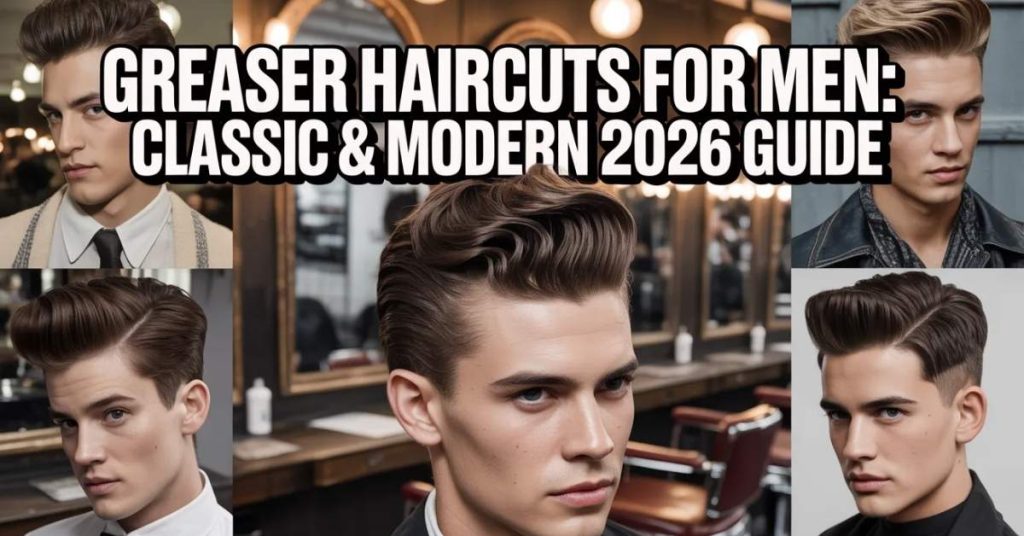
Greaser haircuts for men have never truly disappeared, they’ve just evolved. What started as a rebellious statement in the 1950s has now become one of the most refined and versatile styles in modern men’s grooming. From the iconic pompadours of Elvis Presley to the effortlessly cool slick backs inspired by James Dean, the greaser look continues to influence today’s hair trends.
In 2026, the greaser aesthetic blends classic structure with modern flexibility. Men now adapt these vintage styles to suit professional environments, casual lifestyles, and even high-fashion settings. The result is a perfect mix of heritage and innovation, a look that feels both nostalgic and current.
This guide goes far beyond surface-level inspiration. You will learn the history, techniques, tools, and real-world styling methods that define greaser hairstyles. Whether you want a sharp ducktail haircut (D.A.), a modern greaser look, or a classic pompadour, this is your complete roadmap.
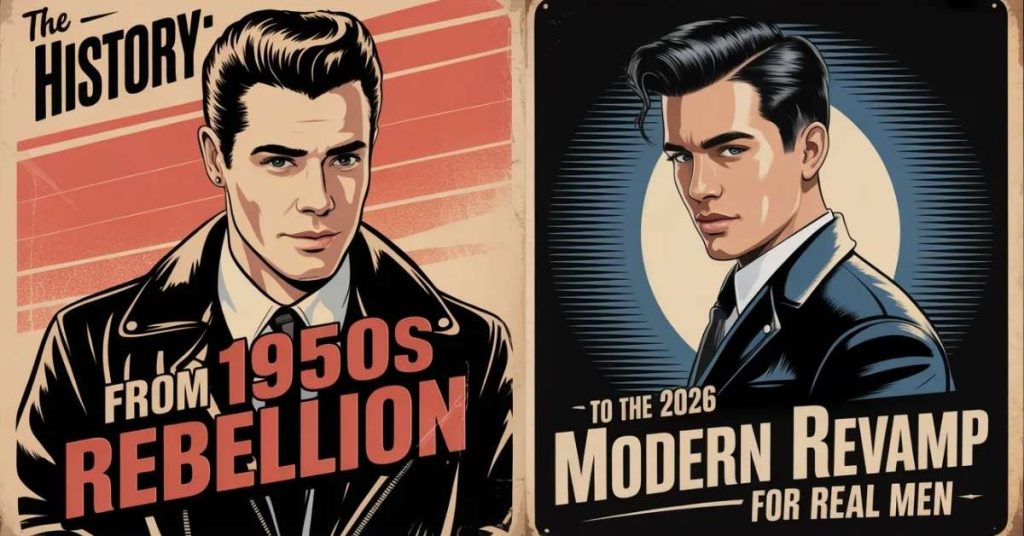
The History: From 1950s Rebellion to the 2026 Modern Revamp
The Birth of the Greaser Movement
The greaser hairstyle emerged in the 1950s as a symbol of rebellion. Young men rejected conservative grooming standards and embraced bold, high-shine hairstyles that required heavy-hold pomade. This look quickly became associated with rock ‘n’ roll culture.
Icons like Elvis Presley and James Dean made the pompadour and slick back globally popular. At the same time, subcultures like the Teddy Boys in the UK added their own twist, incorporating longer sideburns and sharper silhouettes.
Evolution Through the Decades
- 1960s–70s: Styles softened but remained influential
- 1980s: Rockabilly revival brought back volume and shine
- 2000s: Modern barbers reintroduced fades and undercuts
- 2026: Hybrid styles dominate, classic structure with natural texture
Why the Greaser Style Still Works Today
The greaser haircut survives because it adapts. You can wear it:
- Clean and professional
- Messy and modern
- High-shine or matte finish
It fits almost every face shape and hair type with the right technique.
The Core Styles of Greaser Haircuts
Classic Pompadour Styles
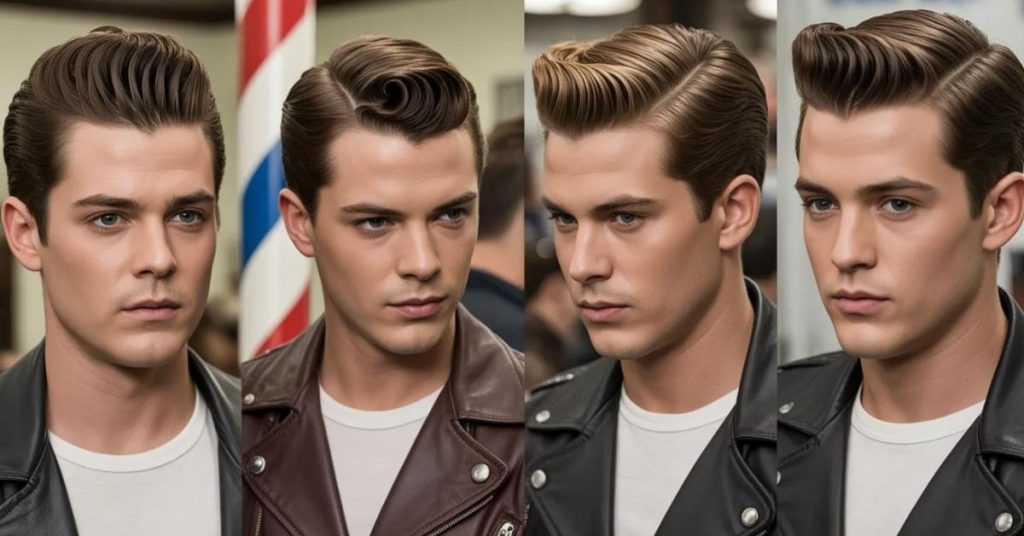
The pompadour is the foundation of all greaser hairstyles. It features volume at the front with hair swept back smoothly.
Key Features
- High volume at the crown
- Clean sides with taper
- Strong hold using pomade
Best For
- Medium to thick hair
- Oval or square face shapes
The Slick Back Undercut Greaser
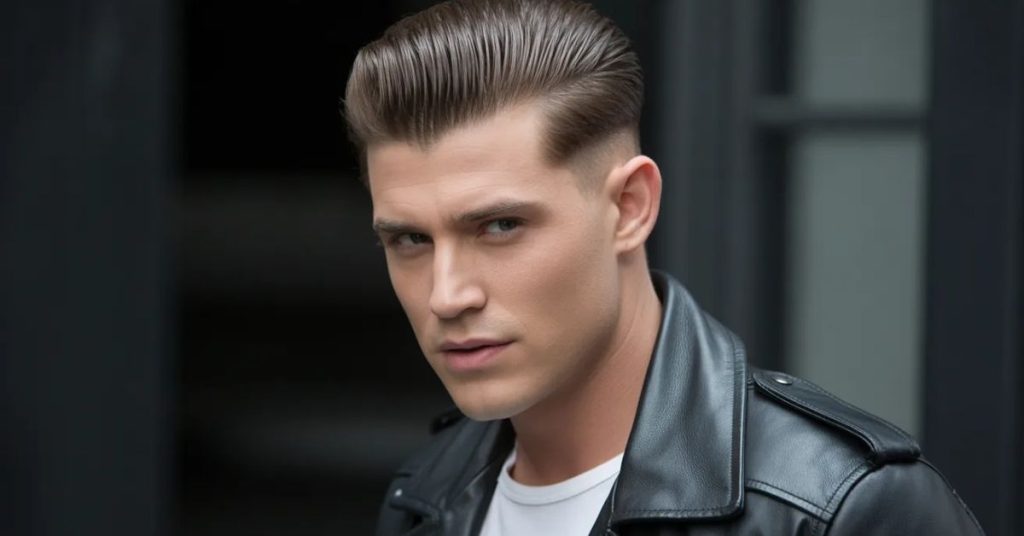
This style blends classic vintage slickness with a clean, modern edge.
Why It Works
- Clean contrast between top and sides
- Easy to maintain
- Perfect for modern professionals
Ducktail Haircut (D.A.)
The ducktail is the most technical greaser haircut. Hair is combed from both sides toward the center back, forming a seam.
Signature Detail
The “ducktail seam” is what separates beginners from experts.
Elephant’s Trunk & Jelly Roll
These bold styles push the greaser aesthetic further.
- Elephant’s Trunk: A curled fringe falling forward
- Jelly Roll: Rolled sides with a sculpted top
These require advanced styling and confidence.
The Technique: The “Radial Taper Method”
Understanding the Fender Structure
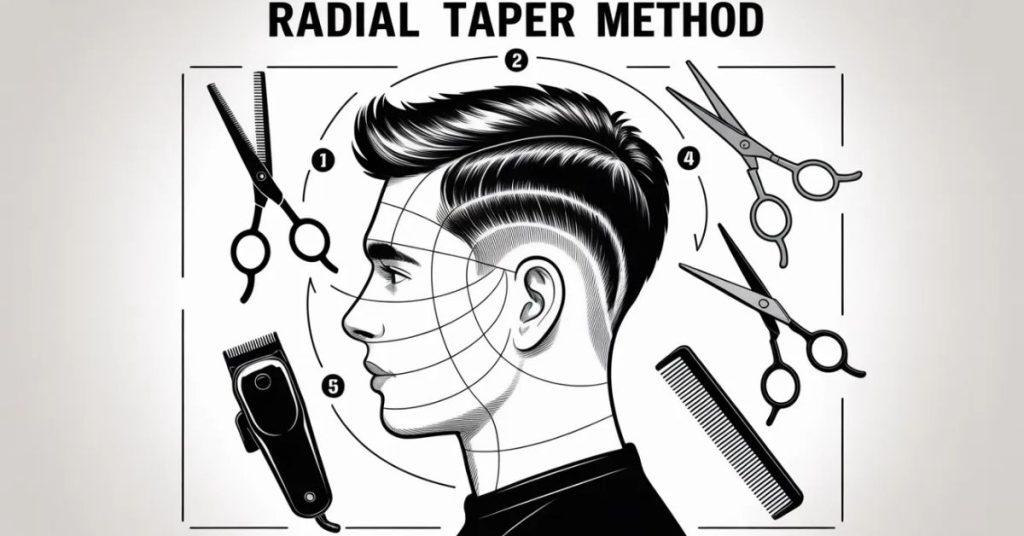
A “fender” refers to how the sides curve and wrap toward the back.
Radial Taper Method (Step-by-Step)
- Start with longer hair on the sides
- Use clippers at an angle—not straight up
- Blend toward the crown in a circular motion
- Maintain weight near the ridge
- Comb hair backward to test flow
This method ensures the hair naturally follows the greaser shape.
The Toolkit: Pomade Science & Product Selection
Oil-Based vs. Water-Based Pomade
| Feature | Oil-Based Pomade | Water-Based Pomade |
| Shine | High | Medium to High |
| Hold | Strong | Medium to Strong |
| Washability | Hard to wash | Easy to wash |
| Restyle | Excellent | Limited |
The “Pomade Viscosity & Hold” Benchmark Study
| Brand Type | Melt Point | Hold Strength | Restyle-ability | Comb Resistance |
| Heavy Oil-Based | High | Very Strong | Excellent | High |
| Medium Oil-Based | Medium | Strong | Very Good | Medium |
| Water-Based Strong | Low | Strong | Moderate | Medium |
| Hybrid Pomade | Medium | Medium | Good | Low |
Key Insight
- Thick hair benefits from high-viscosity products
- Thin hair needs lighter pomade to avoid collapse
How to Use Heavy-Hold Pomade (Step-by-Step)
- Start with slightly damp hair
- Warm pomade in your hands
- Apply to roots first
- Work toward the back
- Finish at the front to avoid drooping
- Comb into shape
Pomade Application Heatmap (Concept)
- Roots & Back: Apply first (maximum hold)
- Mid-Length: Blend evenly
- Fringe: Apply last (light touch)
This prevents a front-heavy pompadour.
Case Study: The Modern Professional Pivot
Problem
A client wants a bold greaser style but works in a corporate office.
Solution: Executive Contour Technique
Steps
- Start with a high-shine pompadour
- Use a dry comb to reduce volume
- Flatten the sides slightly
- Shift parting subtly
- Reduce shine using a towel blot
Result
A clean, office-friendly style that still holds greaser DNA.
Maintenance: The Degreasing Process
Why Regular Shampoo Fails
Oil-based pomades resist water, making them hard to remove.
Effective Degreasing Method
- Apply conditioner to dry hair
- Let it sit for 2–3 minutes
- Rinse with warm water
- Shampoo twice
- Finish with lightweight conditioner
Styling Based on Hair Type
Thin Hair
- Use light pomade
- Focus on volume, not shine
Thick Hair
- Use heavy-hold pomade
- Control bulk with comb technique
Wavy Hair
- Embrace natural texture
- Use medium hold
Interactive Concept: Find Your Grease (Logic Guide)
| Hair Type | Lifestyle | Recommended Product |
| Fine | Office | Light water-based |
| Thick | Active | Heavy oil-based |
| Wavy | Casual | Medium hybrid |
Shine vs. Hold Styling Spectrum
- Matte → Natural → Medium Shine → High Shine
- Light Hold → Flexible → Strong → Firm
Balancing these two factors defines your final look.
How to Talk to Your Barber
Use clear terms:
- “I want a classic pompadour paired with a tapered side finish”
- “Keep the sides weighted to support a clean ducktail shape at the back”
- “Use a radial taper for flow”
Bringing reference photos helps, but technical language gets better results.
Conclusion
Greaser haircuts for men are more than just hairstyles, they represent a culture, a mindset, and a commitment to detail. From the structured elegance of classic pompadour styles to the bold personality of a ducktail haircut, every variation tells a story.
In 2026, the greaser look is no longer limited to subcultures. It has entered mainstream fashion while keeping its original identity intact. You can wear it polished for work, relaxed for casual days, or bold for standout moments.
The key is understanding your hair type, choosing the right pomade, and mastering the technique. Once you do that, you don’t just wear a hairstyle you define it.
FAQs
1. What is the best greaser haircut for beginners?
Start with a classic pompadour or slick back. These are easier to style and maintain.
2. Can thin hair achieve a greaser look?
Yes. Use lightweight pomade and focus on volume rather than heavy shine.
3. How often should I wash pomade out?
2–3 times per week is ideal, depending on product type.
4. What’s the difference between rockabilly and psychobilly styles?
Rockabilly is cleaner and classic. Psychobilly is more extreme and creative.
5. Do I need a barber for a ducktail haircut?
Yes. The D.A. requires precision and technical skill.