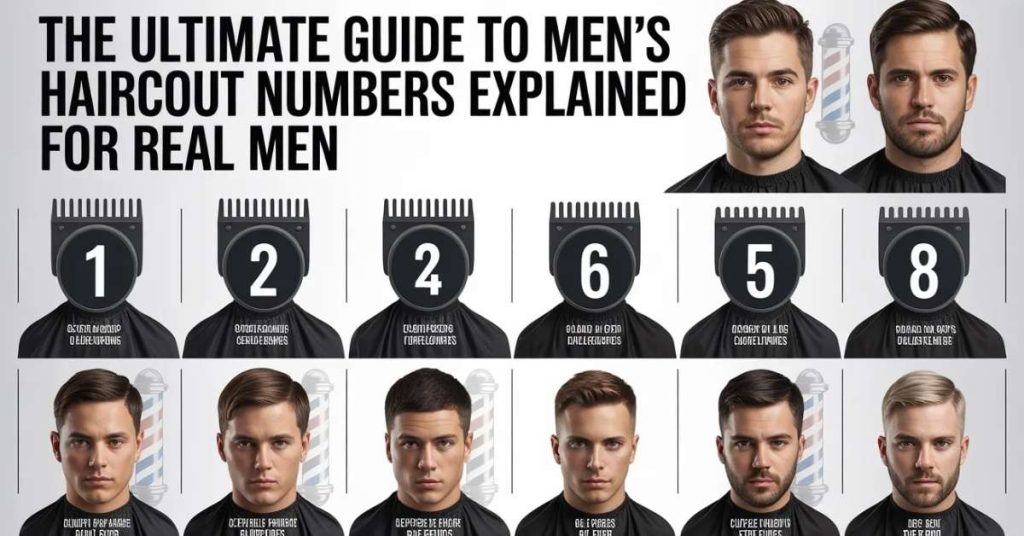
The Ultimate Guide to Men’s Haircut Numbers Explained
Introduction
Walk into any barbershop, and you will hear numbers being thrown around like a secret code, “Give me a #2 on the sides,” or “Blend it with a #1.5.” For many guys, these numbers feel confusing. But once you understand them, you unlock complete control over your haircut.
Men’s haircut numbers are not random. Each number represents a specific hair length, controlled by clipper guard sizes. These guards determine how much hair stays on your head after a cut. When you understand this system, you stop guessing and start communicating clearly with your barber or even cutting your own hair with confidence.
In this complete 2026 guide, you will learn everything about hairclipper guard sizes, haircut length charts, fade numbers, and blending techniques. You will also discover advanced barber insights like the Lever-Logic Method, Scalp Exposure Matrix, and real-world fade transformations. By the end, you will know exactly what a #3 looks like, how fades work, and which numbers suit your face shape and hair type.
What Do Haircut Numbers Actually Mean? (The Basics of 1/8-Inch Increments)
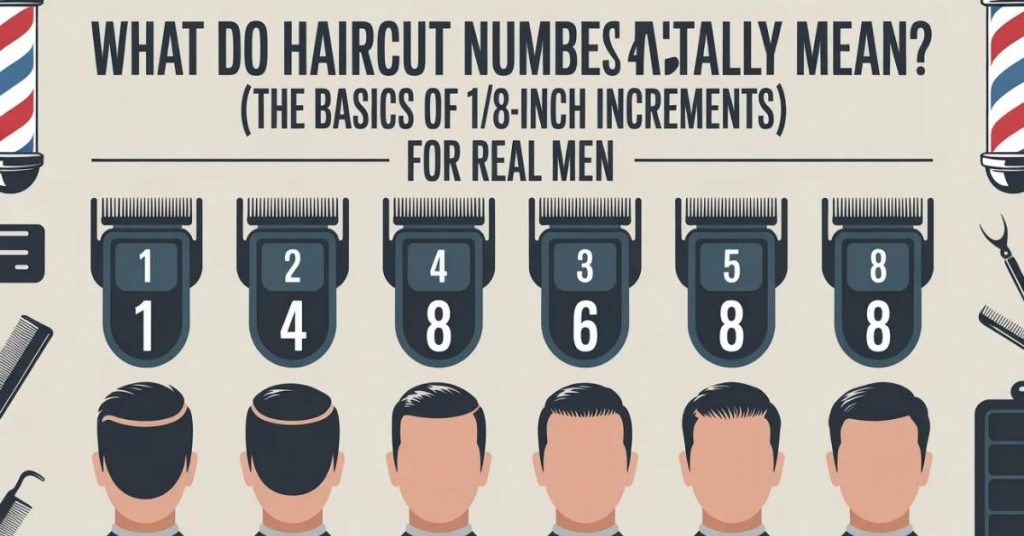
Haircut numbers are based on a simple measurement system. Each clipper guard increases hair length in 1/8-inch increments (approximately 3 mm).
Here’s how it works:
- A #1 clipper guard keeps about 1/8 inch (3 mm) of hair on the head.
- A #2 guard leaves 1/4 inch (6 mm)
- A #3 guard leaves 3/8 inch (10 mm)
- A #4 guard leaves 1/2 inch (13 mm)
This pattern continues up to #8, which leaves a full 1 inch (25 mm) of hair.
Barbers rely on this system to create precise, consistent cuts. Instead of saying “short” or “long,” numbers provide exact measurements. That’s why learning men’s haircut numbers is essential if you want predictable results every time.
The Definitive Haircut Number Chart (#0 to #8)
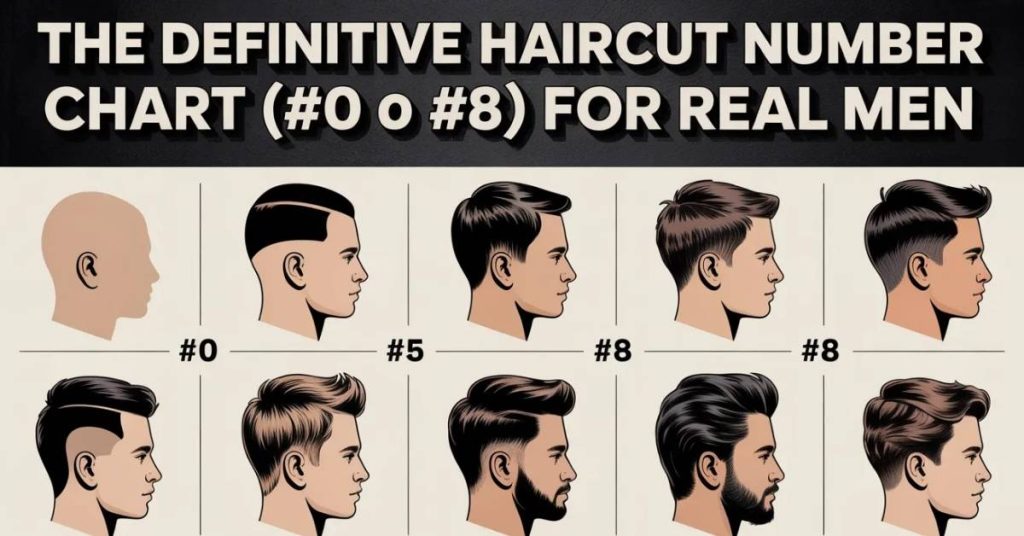
Below is a complete haircut length chart that shows clipper guard sizes in inches and millimeters.
| Guard Number | Length (Inches) | Length (mm) | Description |
| #0 | 1/16″ | 1.5 mm | Very close cut, almost bald |
| #0.5 | 3/32″ | 2.4 mm | Slight shadow, used in fades |
| #1 | 1/8″ | 3 mm | Short buzz, scalp slightly visible |
| #1.5 | 3/16″ | 4.5 mm | Smooth blending length |
| #2 | 1/4″ | 6 mm | Clean, short, minimal scalp |
| #3 | 3/8″ | 10 mm | Fuller look, popular choice |
| #4 | 1/2″ | 13 mm | Medium length, neat and classic |
| #5 | 5/8″ | 16 mm | Slightly longer, soft finish |
| #6 | 3/4″ | 19 mm | Longer taper styles |
| #7 | 7/8″ | 22 mm | Thick, full coverage |
| #8 | 1″ | 25 mm | Longest standard guard |
This chart forms the foundation of all modern men’s haircuts. Whether you want a buzz cut, taper, or fade, everything starts with these numbers.
The “Scalp Exposure” Matrix (Original Data Insight)
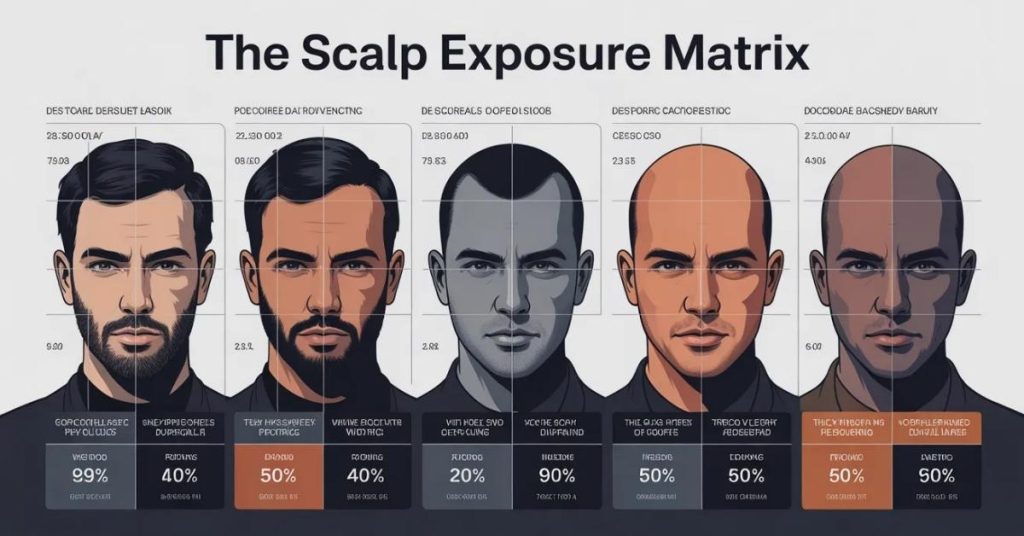
Hair length alone does not determine how your haircut looks. Hair density makes a big difference. A #2 guard looks much fuller on thick hair but can appear lighter or more exposed on thin hair.
Here’s a practical matrix to set realistic expectations:
| Guard | Thin Hair (Scalp Visibility) | Medium Hair | Thick Hair |
| #1 | 70% visible | 40% visible | 10% visible |
| #2 | 40% visible | 15% visible | 0% visible |
| #3 | 15% visible | 5% visible | 0% visible |
| #4 | 5% visible | 0% visible | 0% visible |
Why This Matters
If you have thin hair, going too short can expose your scalp more than expected. On the other hand, thick hair can handle shorter guards without showing skin.
This is why experienced barbers adjust clipper numbers based on:
- Hair density
- Growth patterns
- Head shape
Understanding this matrix helps you avoid surprises and choose the right haircut length for your hair type.
Beyond the Guard: The Role of the Clipper Lever
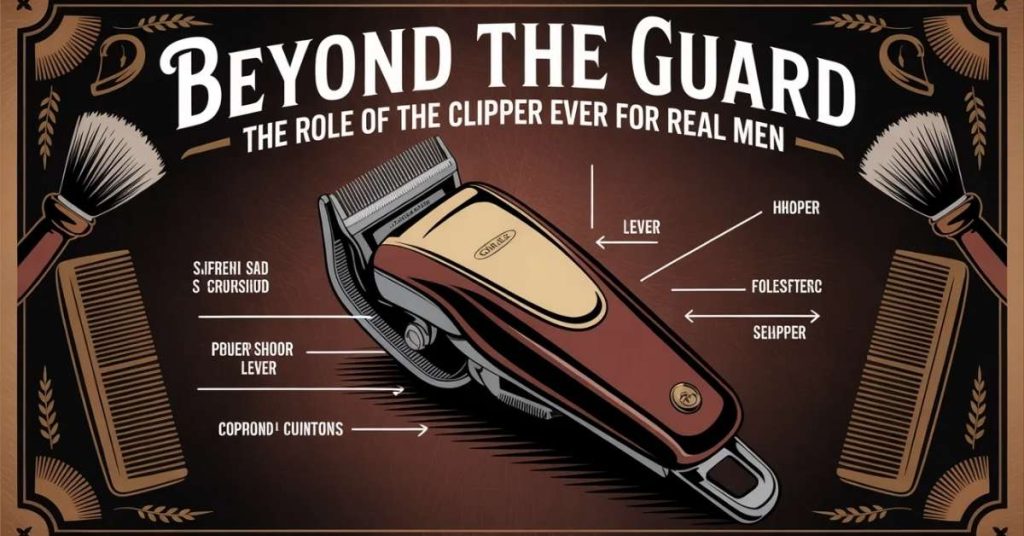
Most beginners think clipper guards are the only thing that controls length. That’s not true. The clipper lever adds another layer of precision.
What Is the Clipper Lever?
The lever is located on the side of the clipper and changes the blade position to adjust the cutting length. It changes the cutting length slightly without switching guards.
- Closed Lever → Cuts shorter
- Open Lever → Leaves more hair
The “Lever-Logic” Methodology (Advanced Barber Technique)
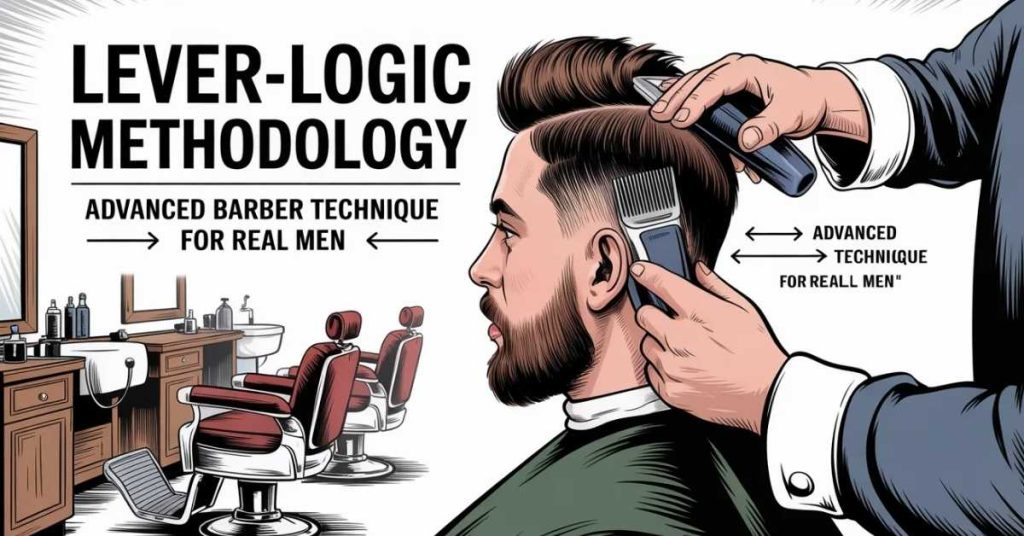
Professional barbers use the lever to create half-step lengths between guards.
Example:
- #1 guard (closed) = 3 mm
- #1 guard (open) = 4.5 mm
- #2 guard (closed) = 6 mm
This creates smooth transitions:
- #1 → #1 open → #2
Instead of harsh lines, the fade looks blended and natural.
Why Lever Control Matters
Without lever work:
- Haircuts look choppy
- Fade lines become visible
- Blending becomes difficult
With proper lever use:
- Transitions look seamless
- Gradients appear smooth
- Haircuts look professional
Choosing the Right Number for Your Head Shape
Not every haircut number works for every person. Your head shape and facial structure should guide your choice.
Oval Face Shape
- Works with most lengths
- Best choice: #2 to #4 on sides
Round Face Shape
- Avoid very short sides
- Best choice: #3 or #4 for balance
Square Face Shape
- Strong jawline suits short fades
- Best choice: #1 to #2
Long Face Shape
- Avoid high fades
- Best choice: #3 to #5
The goal is to create balance. The right combination of clipper guard sizes and fade lengths can enhance your natural features.
The Fade vs. The Taper: Which Numbers to Mix?
Many people confuse fades and tapers, but they are different techniques.
Fade
- Gradual transition from skin to longer hair
- Uses multiple guards (#0 → #3)
- Sharp and modern
Taper
- Subtle shortening around edges
- Uses fewer guard changes (#2 → #4)
- Classic and professional
Case Study: The “3-Step Fade Transformation”
Let’s break down a real-world example.
Before
- Head shape looked boxy
- Hair sat heavy around the parietal ridge
- No definition in the neckline
Process
- #1 at the nape → Clean foundation
- #2 mid-section → Soft transition
- #3 near the ridge → Maintains volume
Barber used lever adjustments between each step to blend smoothly.
After
- Head shape looked more structured
- Fade enhanced natural contours
- Overall appearance became sharper and more masculine
This shows how combining the right haircut numbers can completely transform a look.
Conclusion
Understanding men’s haircut numbers changes the way you approach grooming. Instead of guessing, you gain precision. Instead of confusion, you gain control.
From the basic haircut length chart to advanced techniques like the Lever-Logic Method and Scalp Exposure Matrix, every detail helps you make smarter decisions. Whether you want a clean buzz cut, a sharp fade, or a classic taper, the right combination of numbers makes all the difference.
When you learn this system, you don’t just get better haircuts, you communicate like a pro. And that’s what separates an average look from a sharp, confident style.
FAQs
What does a number 3 haircut look like?
A #3 guard leaves roughly 10 mm of hair on the head. It looks full but still neat. It is one of the most popular choices for a balanced style.
What is a #0.5 guard?
A #0.5 is a blending guard. Barbers use it between #0 and #1 to achieve a smoother, more seamless fade.
Can I mix clipper brands like Wahl and Andis?
Not always. Guard sizes may differ slightly. It’s best to stick to one brand for consistency.
What is the highest clipper guard number?
The standard highest guard is #8, which leaves 1 inch of hair.
How do I ask my barber for a perfect blend?
Use clear numbers and say:

- “#2 on the sides, blend into #3 on top”
- Ask for a “low fade” or “mid fade,” depending on the style you prefer.